‘A good project is one that looks potentially winning right from the start, not one that only finishes on time’
That is the sharing of FSOFT CEO Pham Minh Tuan at the training session on Project Management for teamleads and key members of BA departments at FSOFT HCM last weekend. Here, Mr. Tuan affirmed the importance of project management skills and that if you make a mistake in this job, the results will not be as expected.
“If you have to chain tasks together to get better results, or change to exceed the expectations of the people you serve, it requires great skills in Project Management,” said FSOFT CEO at the sharing session. According to Mr. Tuan, the project here is not only about software projects but also personal projects such as applying for school for children, repairing houses, moving houses, etc. A good project is not only a project that reaches the destination. In terms of budget, a good project will have everything good: planning, schedule, cost, resource… from day one. Controlling those factors will help our project have a fighting spirit that is kept throughout until the project is closed.
“A successful project should feel successful from the very beginning, not near the end. In essence, after finishing any project, we all should feel happy. Otherwise, we’ve made some mistake,” Mr. Tuan affirmed.
He also pointed out the factors that make project management unfavorable such as not understanding the criteria for evaluating a successful project, forgetting the stakeholders, not mastering the scope, cost, or expectations of the parties, not planning, ignoring the assessment of the risks that will be encountered, and loose communication between the parties. Among these, all are worth paying attention to, but the CEO of FSOFT focused on analyzing Planning, Scope & Cost, and Risk.
Specifically, before starting, the project needs to be clearly planned with the elements Proper, Prevent, Protect, Performance. Careful preparation at this stage will help members enter the battle feeling victorious and believing in victory.
“The planning job must determine what is the most important task and identify what is at risk for that task. Ì that task is slow, the whole project will be slow. And especially, it’s important to know how to turn Critical Path into non-Critical Path,” he added.
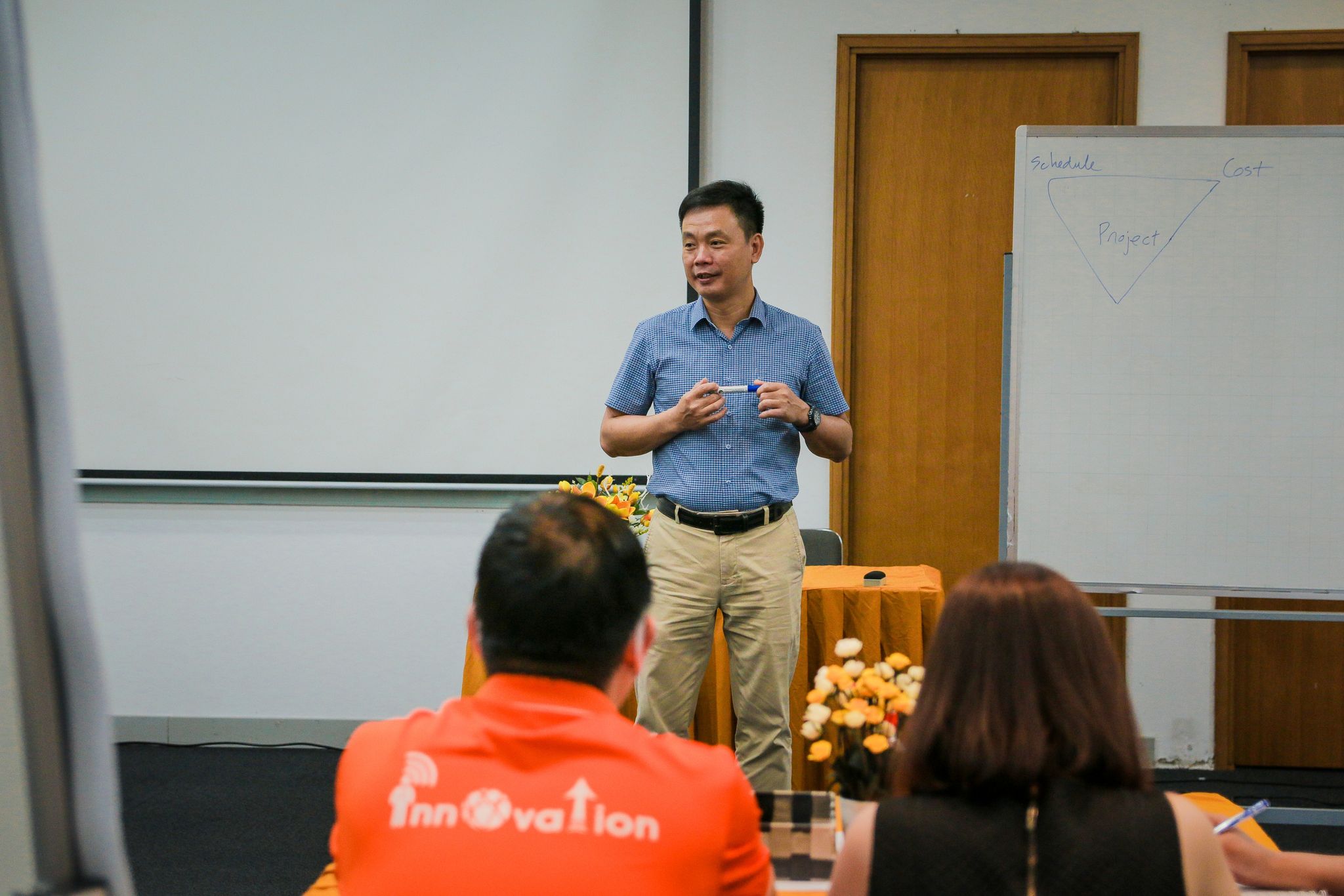
Scope & Cost factors will go together. This includes Stakeholders’ Expectations rather than just measurable things. If the expectations of the parties are unreasonable, then we need a way to lower those expectations before starting the project to set standards. When you agree and compromise, you need to comply. If you change it, you need more cost and time. This is the basis for negotiating with the parties about the expectations of the project.
At the program, Mr. Tuan also analyzed many typical case studies, many risks in the project, and at the same time listened to and answered questions from attendees.
This is the first offline training session of the CTC Training Center at FSOFT HCM after months of events being held online because of the pandemic.
DucLM17