Back

Since 1998, during visits to technology companies in India, Mr. Truong Gia Binh, Mr. Nguyen Thanh Nam, and Mr. Le The Hung (“Hung Rau”) were impressed by the enchanting offices of Infosys. What amazed them even more was discovering that Infosys had begun planning its grand campus when the company had only 250 employees and 8M USD in revenue. The leadership at Infosys believed that having an office designed and constructed to the highest quality standards was the best commitment to quality and a long-term vision, especially in countries still grappling with poverty like India and Vietnam.

Upon its establishment, FSOFT shared office spaces with other FPT units at the HITC building, later moving to the FPT Building in Hanoi. FSOFT branches in Da Nang (2003) and HCM (2004) had to rent external office spaces.

Within a few years, FSOFT’s growth surpassed expectations, prompting the need for larger headquarters to accommodate the expanding workforce. FSOFT HCM moved to E-Town, and FSOFT Da Nang relocated to Vinh Trung Plaza. This marked the time when leaders seriously considered constructing offices only for FSOFTers.

This serious consideration was rooted in the experiences of leaders such as Truong Gia Binh and Nguyen Thanh Nam, who, since 1998, envisioned modern office complexes similar to those of large technology enterprises worldwide during visits to high-tech zones in Taiwan, India, and other countries.

It’s not coincidental that major global software companies like Infosys, Wipro (India), Neusoft (China), TCS (Japan) possess large, modern campuses. Leading tech giants like Google, Facebook, Microsoft also have distinct campuses. These campuses, beyond modern offices, incorporate research and development areas, training facilities, libraries, dining halls, cafes, entertainment and innovation zones, landscapes, and even dormitories for employees.

For European and American companies, campuses may primarily address the need for workspace with a large staff. However, for tech companies in developing countries like India and China, campuses hold more significant meaning. They represent an opportunity to achieve world-class standards by investing in professional work environments in such societies that are still developing.

On the other hand, both FSOFT and FPT, always cultivate a distinctive corporate culture: respecting the all characters of each employee, providing opportunities for them to be themselves and showcase their unique talents. “To maximize potential, FSOFT employees need their own space. Renting offices wouldn’t allow us the freedom to design innovative spaces, a place for our company’s unique activities,” said FSOFT CEO Pham Minh Tuan.

In 2005, when FSOFT’s revenue was just 9.5M USD, and FSOFT Da Nang was still finding its footing, the leadership made a bold decision – investing 1.5M USD to purchase 3 hectares of land in the Massda industrial zone. This decision materialized with the opening of the Masda building in January 2010. Beautiful and featuring innovative concepts like bathrooms and wardrobes for employees, apartments for overnight stays, and even a golf practice area, Masda building proved to be a strategically sound decision for FSOFT Da Nang.

However, the true impact of campuses became evident with the F-Town 1 project, FSOFT HCM’s first headquarters. Previously, the HCM branch rented offices in E-Town, Tan Binh District. E-Town was favored by many large businesses for its near-perfect match of A-grade office standards at a B-grade rent, with a convenient location just 10 minutes from Tan Son Nhat Airport.

The Ho Chi Minh City High-Tech Park (SHTP), established on October 24, 2002, is one of the three National High-Tech Parks established by the Government. Despite being only 15 km from the city center, the famous Hanoi Highway was known for traffic jams and dust, taking over an hour to reach the central of HCMC. Even though FPT was allocated 3 hectares there and had started land clearance and design, no FPT unit intended to move there, and the project was postponed.

FSOFT HCMC thrived in E-Town. However, the groundbreaking ceremony for the Masda building in Da Nang brought new ideas to FSOFT HCMC’s leaders. They began contemplating building their own headquarters. Then Director of FSOFT HCM Pham Minh Tuan took responsibility and committed to continuing the project in SHTP.

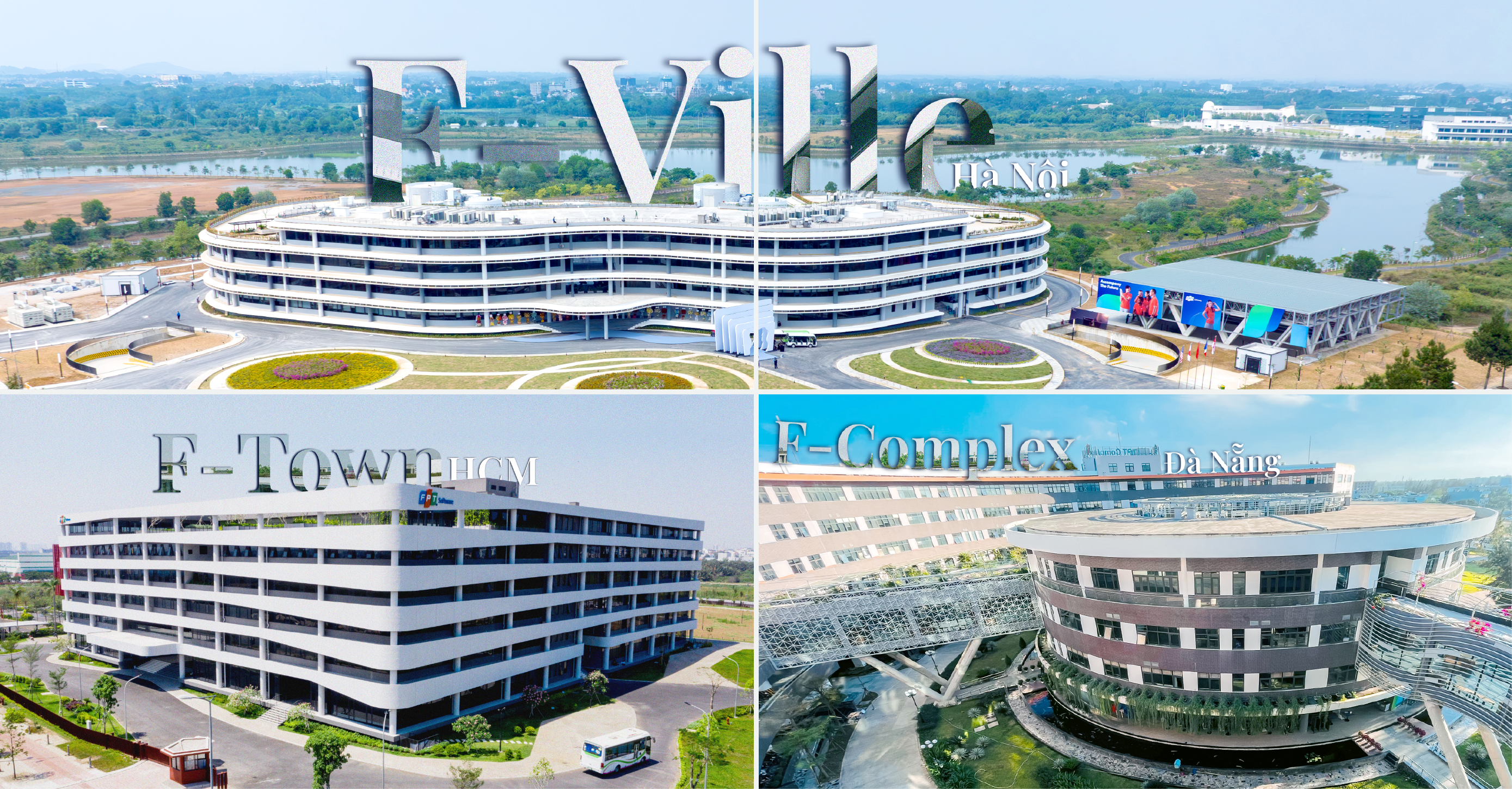
The biggest challenge was convincing employees to move from E-Town to District 9. The new campus, along with a comprehensive support program featuring WiFi-equipped buses, accommodation subsidies for those willing to move to District 9, did not retain 1/4 of FSOFT HCM’s workforce initially. However, it not only prevented a decrease in the branch’s revenue but also spurred growth after just one year. This marked the first office complex that FSOFT constructed based on the campus model they had envisioned earlier. F-Town’s initiation also signaled FSOFT as a pioneering Vietnamese company, owning and opening its own campus.

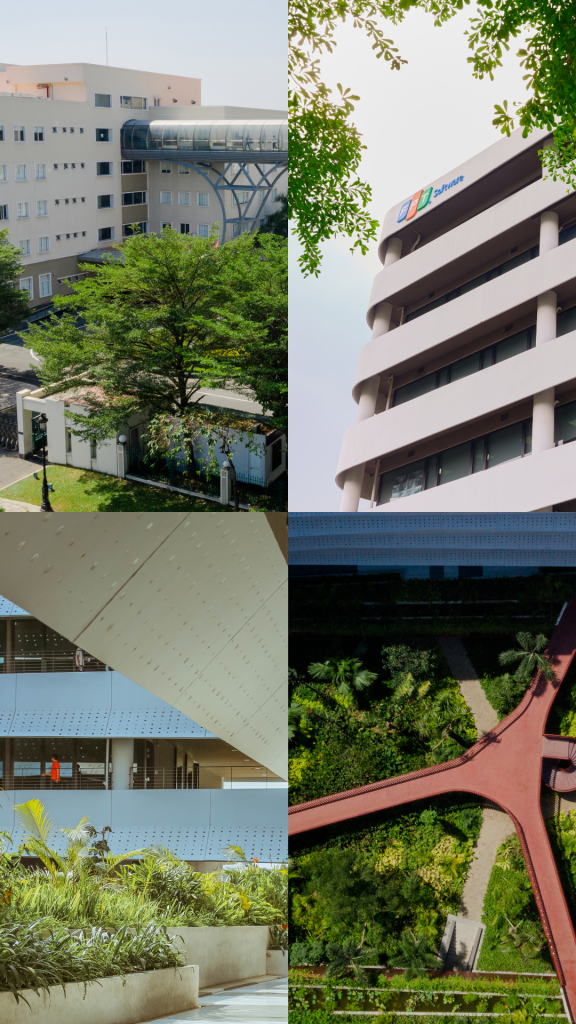
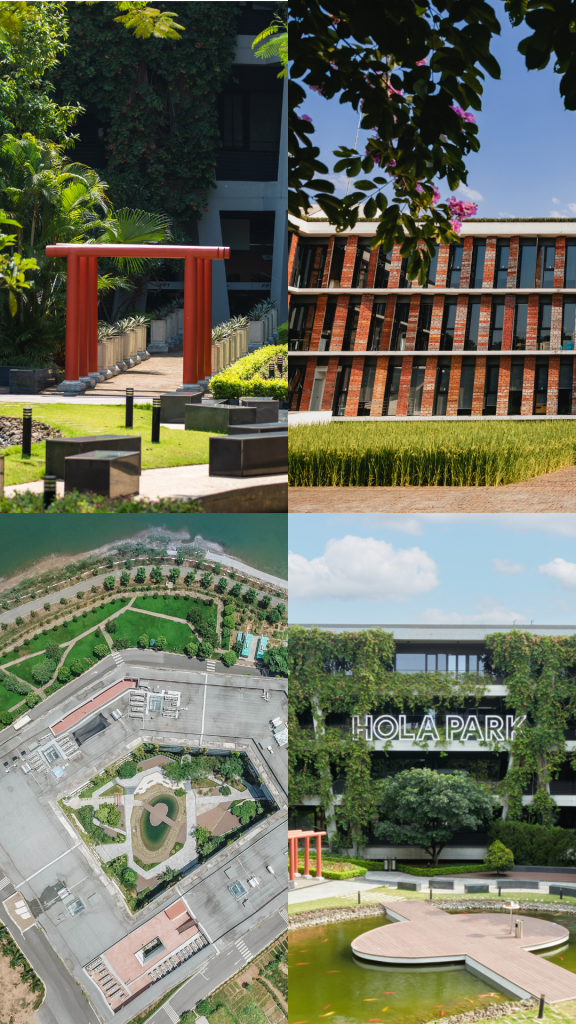
For FSOFT Hanoi, the Hoa Lac High-Tech Park project had long been on paper. In the 2010s, over 1,000 hectares of land remained desolate, used only for cassava and free-roaming cattle. On November 13, 2013, F-Ville 1 – the dream “Software Village” of FSOFT , was officially launched – the first and largest software project based in Hoa Lac High-Tech Park. More than just a groundbreaking project, F-Ville 1 made headlines for its green spaces, natural light, and fresh air, resembling a resort with a swimming pool and a football field, nestled alongside a winding stream from Tan Xa Lake.


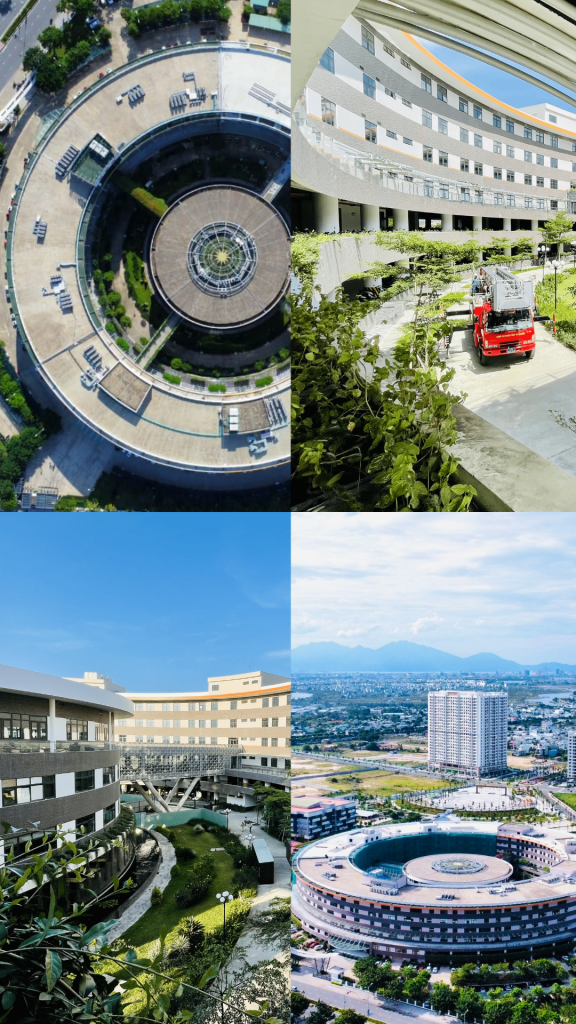
However, Massda was just the beginning. The building is now dwarfed, and FSOFT Da Nang has almost entirely transitioned to F-Complex – a office complex shaped like a Dong Son drum if viewed from above, located in FPT City Da Nang. F-Complex, built on a 5.9-hectare land, can accommodate up to 10,000 people. Integrating with workspaces and relax areas within an ecosystem of apartments, townhouses, schools, and more, F-Complex has been recognized by the government as a Concentrated Information Technology Zone. Furthermore, it became the first project in Vietnam to receive the EDGE Green Building certification from the International Finance Corporation (IFC) for efficient resource use and reduced greenhouse gas emissions.

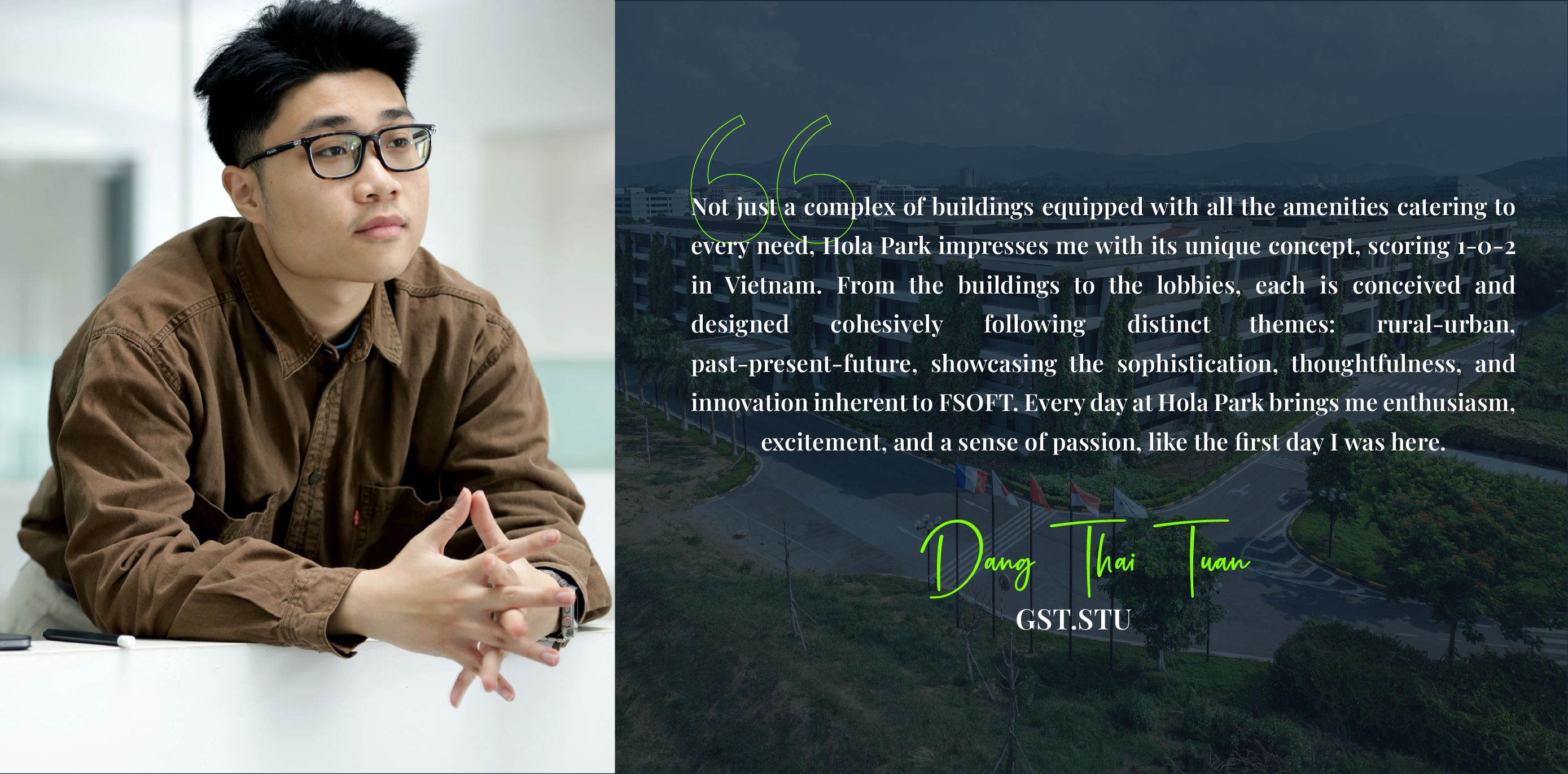
In Hanoi, following F-Ville 1 rural village is F-Ville 2 with the theme of Hanoi’s streets, and by October 2023, F-Ville 3 was introduced with the message “Infinity,” embodying the unlimited dreams of Vietnamese developers. This complex is  called Hola Park, inspired by the term “Hola” in Spanish (pronounced Oh-lah), meaning “Hello” – expressing joy and excitement in welcoming everyone to Hola Park. FSOFT stands out among enterprises for investing in large-scale infrastructure, solidifying its position as one of the earliest contributors to the Hoa Lac High-tech Park. Complementing F-Ville 1 (2012) and F-Ville 2 (2016), FSOFT proudly unveiled F-Ville 3 in 2023, boasting a capacity of 7,000 seats. The architectural design, echoing the concept of Infinity, symbolizes the relentless spirit of development embedded within FPT Software.

In Ho Chi Minh City, F-Town 2, inaugurated in 2014, is linked to F-Town 1 by a stunning glass bridge. The year 2019 marked the introduction of F-Town 3, a sprawling complex spanning 69,000 square meters, incorporating a tropical forest to welcome new employees. F-Town 3 stands out with its unique design featuring a multi-level garden, harnessing natural light to harmonize the structure with nature while optimizing energy consumption. Renowned UK magazine named Wallpaper recognizes this campus as a pinnacle of Ho Chi Minh City’s bioclimatic architecture.

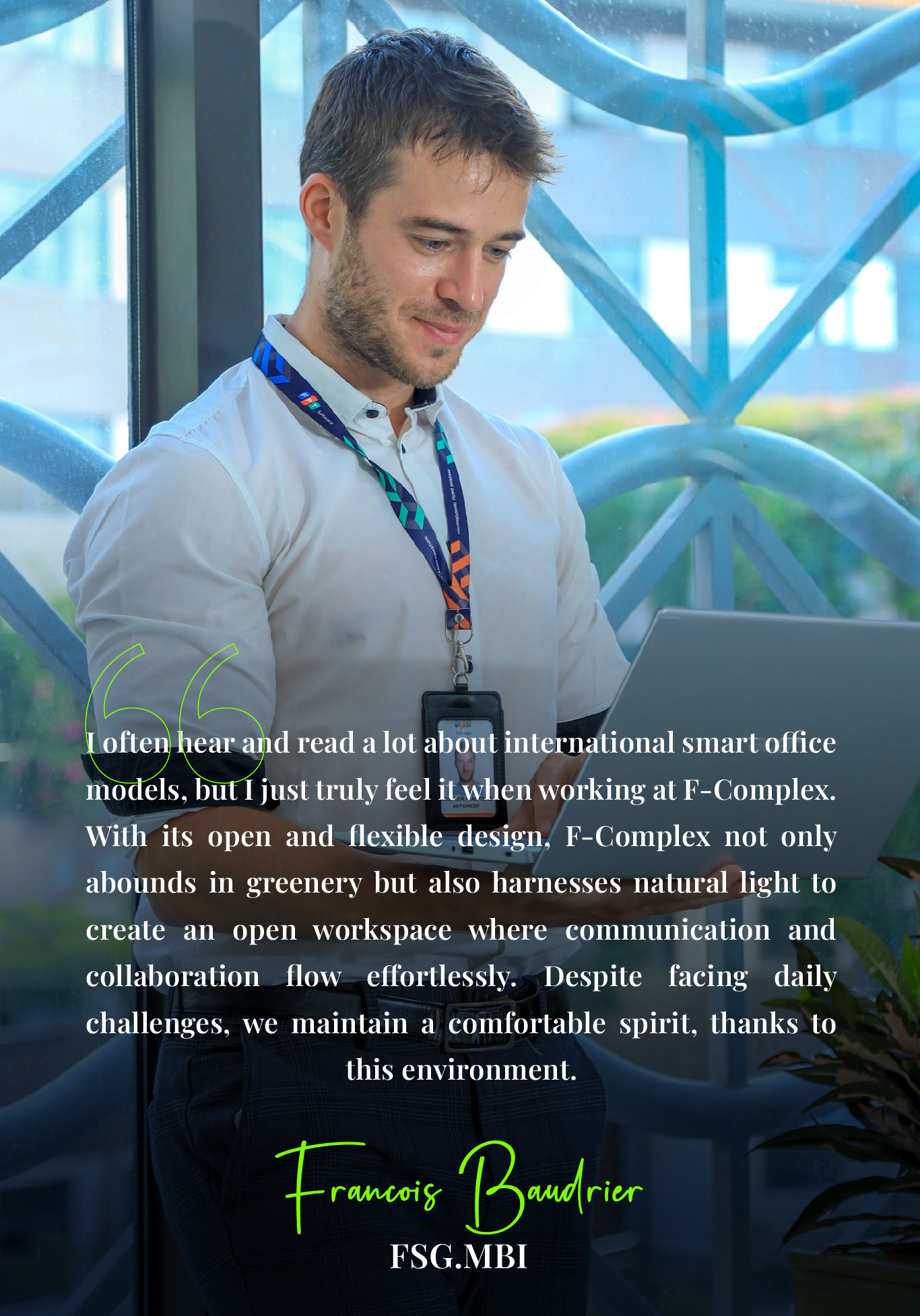
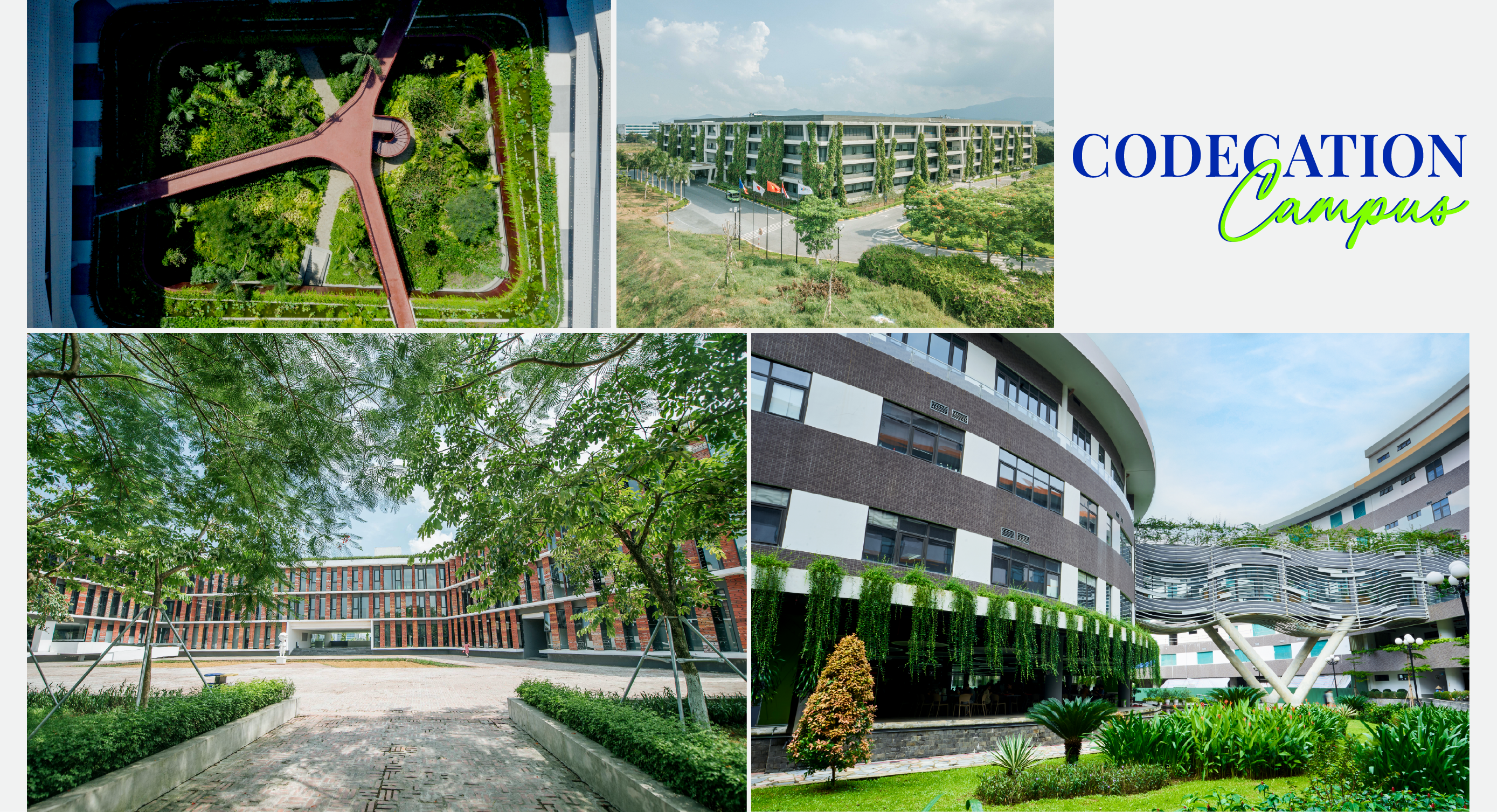
Whether in F-Town, F-Complex, or F-Ville, you will witness everything FSOFT values for its workforce, partners, and customers. FSOFT’s campuses have extensive green areas with diverse options for physical and mental healthcare, providing the latest technological trends for employees to constantly innovate, learn, and develop. These campuses have contributed to changing the perception of young people about the office environment, especially in the IT corporate, which was once considered as boring workplace.

FSOFT CEO Pham Minh Tuan emphasizes that to become an World-class enterprise, attracting and promoting resource development is vital. Therefore, he hopes to transform the campus complex into an icon of the Vietnamese IT industry, reaching a leading position in the Asia-Pacific region, becoming a “magnet” for global IT engineers.

Towards the goal of contributing 50% to FPT Corporation’s target of 1 million employees – 1 million digital transformation warriors by 2035, FSOFT will continue to expand its market, open branches, and establish campus/office complexes in major cities in Vietnam such as Hue, Quy Nhon, Nha Trang, and also in international markets like Mexico, Saudi Arabia, Romania, Colombia.

*The article extensively utilizes materials from the book “Đek biết gì cũng tiến” (Moving Forward Without Knowing Everything). Cucumberr would like to express our appreciation to the authors Nguyễn Thành Nam, Phan Phương Đạt, Dương Thành Nhân, Nguyễn Thanh Nga, and Bùi Anh Tuấn.

Edit: Ngoc Hoa, Minh Duc
Design: Ha Duyen

Close