Then the “dot-com bubble” bursted, and the software export dream temporarily ended after both offices in India and the US closed in 2002. Of course, FPT leaders could not be romantic without any financial support. At that time, the company decided to invest 1 million USD in software export in 1999, FPT’s capital of the previous year was only 1 million USD.
The expected capital source for software delivery came from a bank loan. During the period of “paying tuition” of 600,000 USD to enter the Indian and American markets, FSOFT’s team on the one hand built our own process and quality management department, on the other hand invested in improving qualifications, team skills to achieve CMM level 4. This is a set of 5-level standards, measuring maturity for software companies, founded by Carnegie Mellon University. In 2002, FSOFT was on the list of 120 software companies globally to achieve CMM level 4 certification.
Also at the end of 2022, the contract with the first multinational customer – Unilever helped FSOFT achieve the annual sales target and become profitable. Previously, losses made some of FPT’s top leaders consider closing FSOFT.
“The meeting of fortune” is Mr. Truong Gia Binh’s recollection of the meeting between FSOFT and senior leaders of Japan’s Sumitomo Corporation, opening up opportunities for the company to set foot on Japanese land, which continued writing the dream of reaching globally. Another piece of luck was that an overseas Vietnamese helped connect FSOFT with Harvey Nash, a world-famous IT human resources supplier. In fact, all luck is lost if we cannot grasp it. FSOFT’s team, on the one hand, maintained romantic aspirations, on the other hand, still focuses on the practical concerns.
For example, almost the entire company spent the year of 1999 learning English, or studying for exams to get top professional certifications in technology. Or if there were only 2 people who knew Japanese, FSOFT dared to take on projects in Japanese and kept recruiting talents and training non-stop. FPT/FSOFT’s senior leaders such as Mr. Truong Gia Binh, Mr. Nguyen Thanh Nam, Mr. Pham Minh Tuan and later Mdm. Chu Thi Thanh Ha also set an example by rushing to learn Japanese.
Looking back to 2002, the Japanese Government had a policy of choosing countries other than China to minimize geo-economic risks. One year after this policy was issued, Hitachi Software needed to expand their software development partners abroad to reduce costs. Hitachi’s General Director at that time, Ogawa Takeo, asked Mr. Truong Gia Binh to open a software development center for Hitachi in Hanoi. Such relationships were the money for FPT Japan to launch in 2005. Working with customers in “difficult” markets like Japan has honed special skills for FSOFTers.
FPT Japan grew at a rate of over 70% in the period from 2005 to 2008. Along with the success in revenue in the Japanese market, FSOFT expanded the market, present in France, Australia, Singapore and Malaysia. In 2008, the company decided to return to the United States. “Capital” in FSOFT’s hands at this time is not only romantic dreams but also sales of 40 million USD/year and an experienced team operating in many international markets. FSOFT in particular, as well as FPT Corporation in general, are also much more diverse, since FPT Corporation was listed in 2007.
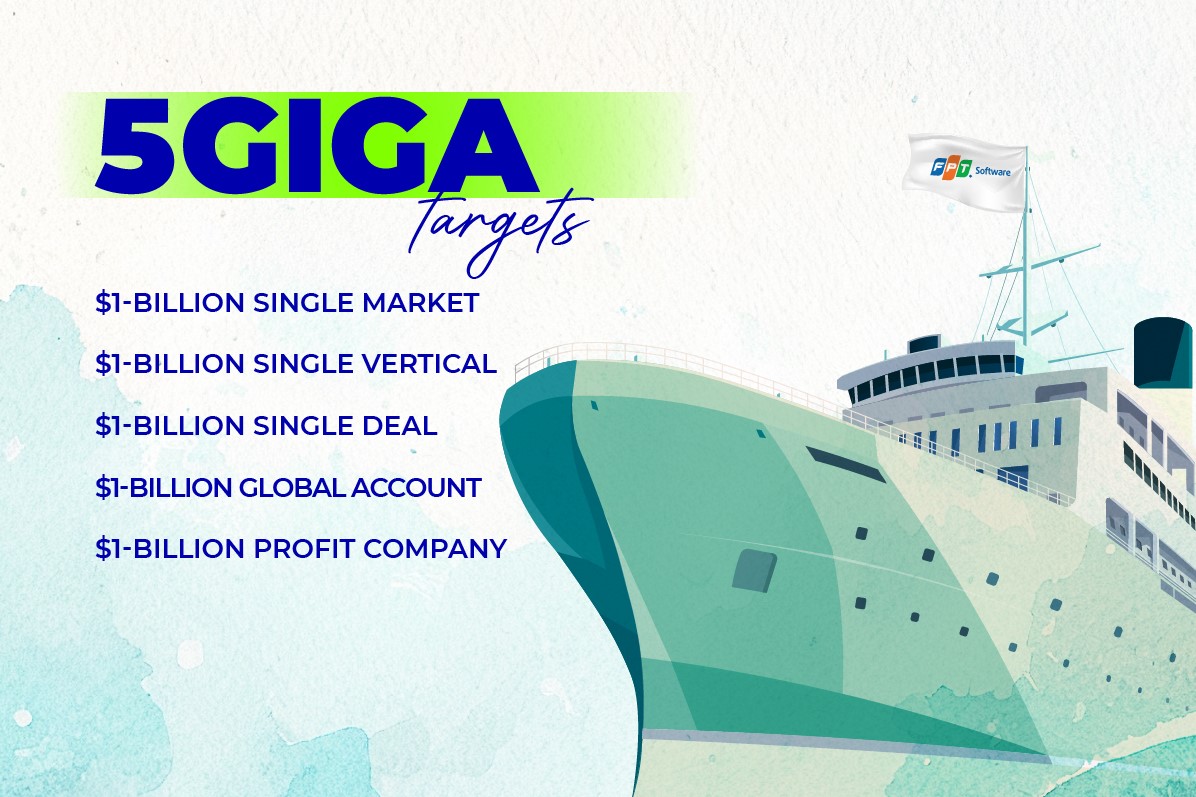
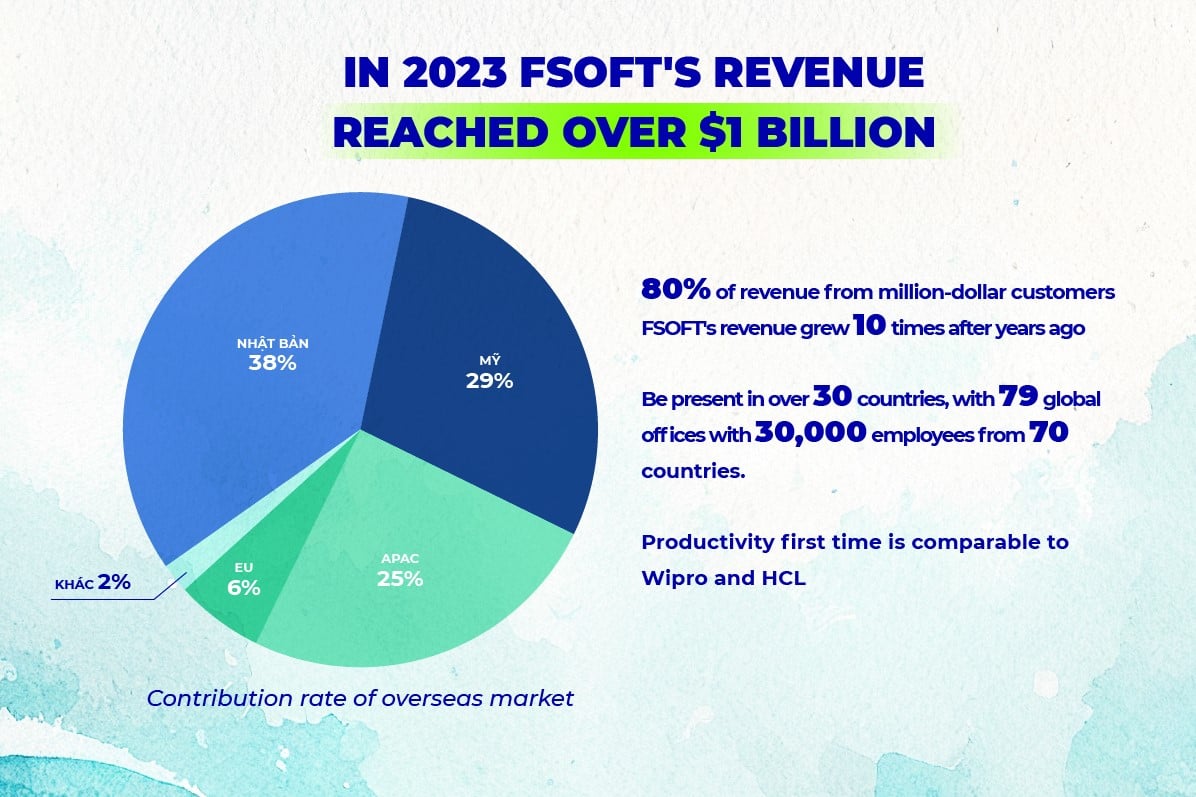
In 2014, FSOFT was the first software service exporter in Vietnam to reach the revenue milestone of 100 million USD with more than 5,000 employees, present in 8 countries and territories around the world. This is also the first time the company’s Board of Directors thought about the next romantic dream – revenue of 1 billion USD. And after 10 years, FSOFT’s revenue grew 10 times, despite the economic crisis and the Covid-19 pandemic…