Looking back at FSOFT’s history, starting from January 13th, 1999, CEO Pham Minh Tuan divides the journey into 5 major phases, each lasting about 5 years and witnessing the growth of FSOFT through major battles.
Looking back at FSOFT’s history, starting from January 13th, 1999, CEO Pham Minh Tuan divides the journey into 5 major phases, each lasting about 5 years and witnessing the growth of FSOFT through major battles.

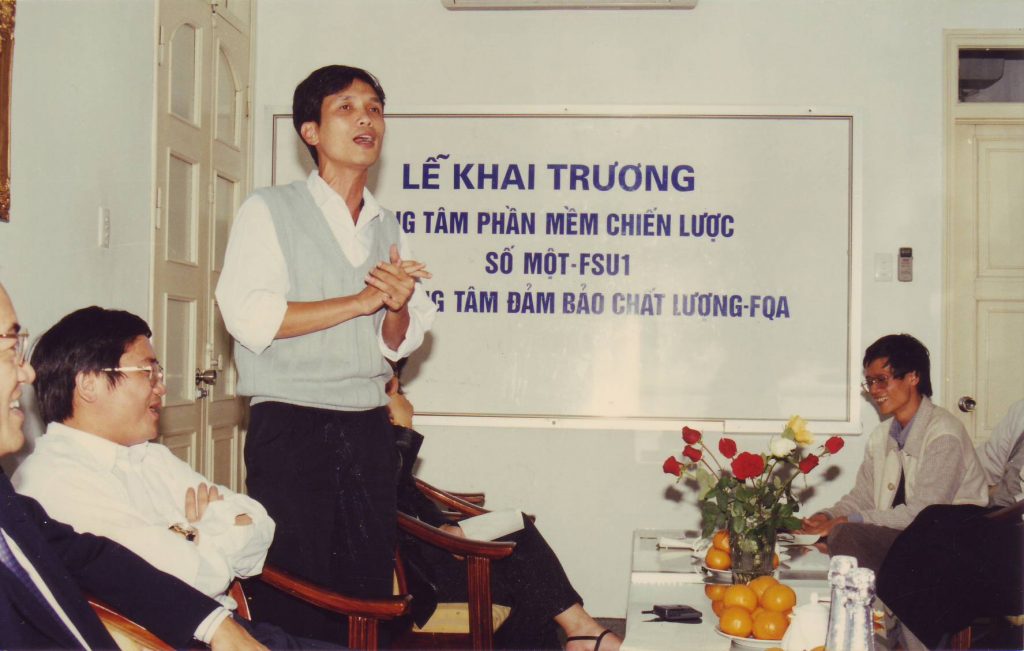
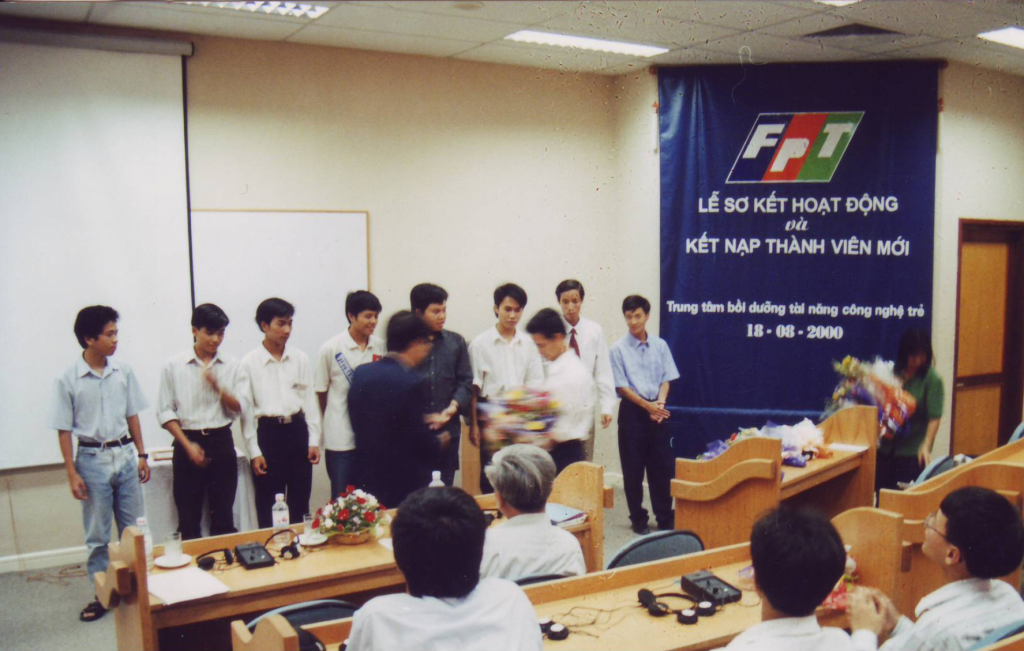
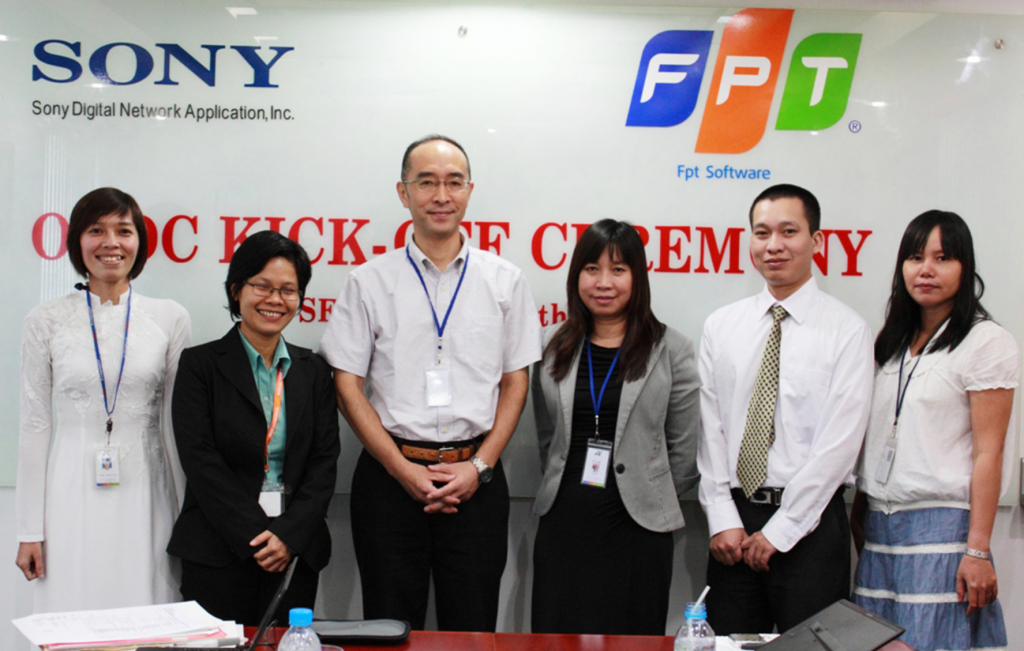
FSOFT took their first steps, striving to prove to the BOD of the FPT Corporation that they can “survive in a completely new ‘playground’ called ‘software export’. And one of the first customers such as Unilever, Sanyo, and Hitachi at that time laid the foundation for FSOFT’s survival, proving that software export could be viable with contracts worth tens of thousands of USD.
According to Mr. Hoang Viet Anh, the 4th CEO of FSOFT who is currently FPT’s Telecom President, “this phase can be called the phase of ‘Survival’ – where FSOFT find a way to survive.”
Mr. Hoang Anh also sees the first 5 years and the first projects with European customers (such as ProxiGates, ProxiMus,…) as vital factors. There are projects such as NTT project, which are rather humble in size but are the milestones that helped FSOFT “enter” the Japanese market – and are the projects that helo the company survive.
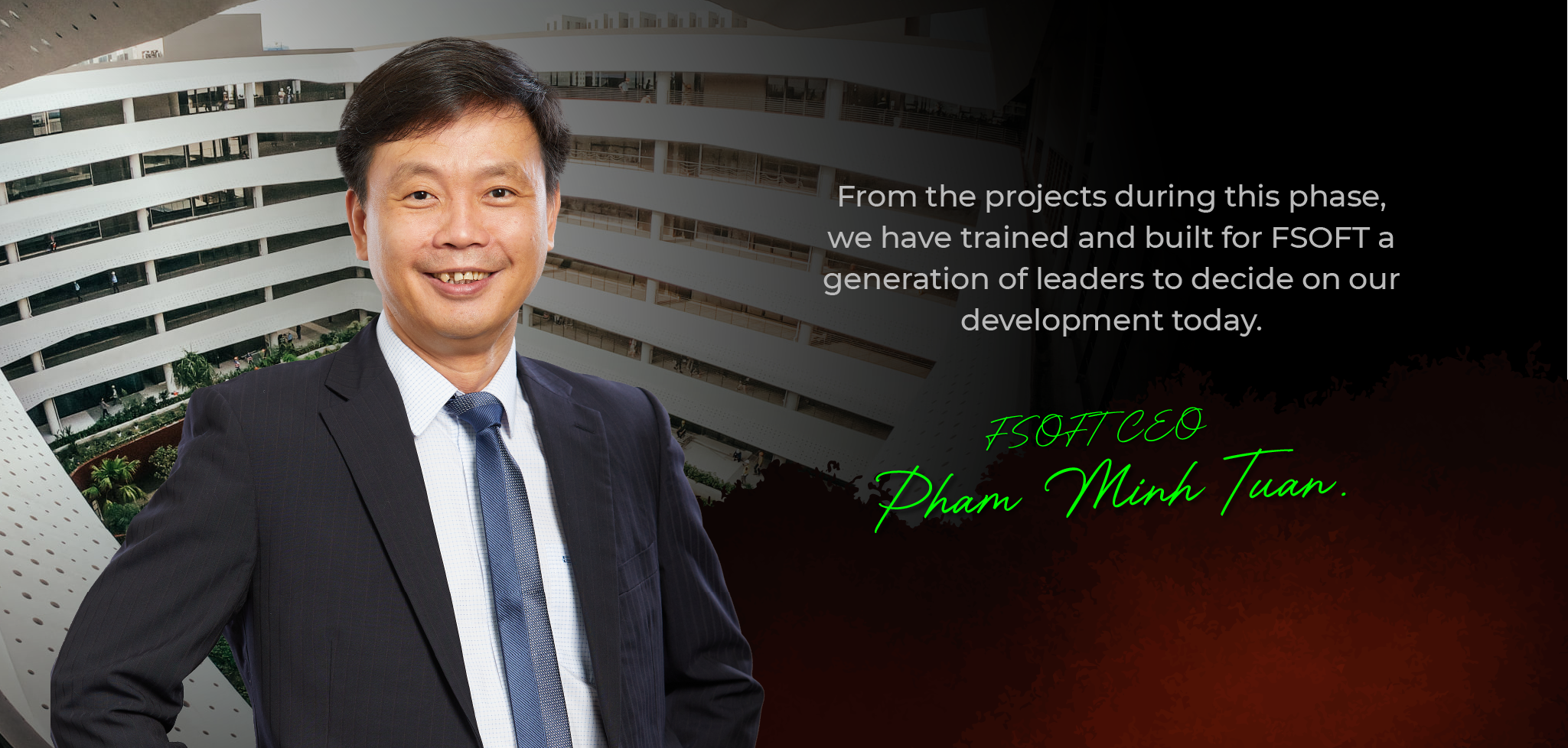
“From the projects during this phase, we have trained and built for FSOFT a generation of leaders to decide on our development today,” Mr. Tuan shared.
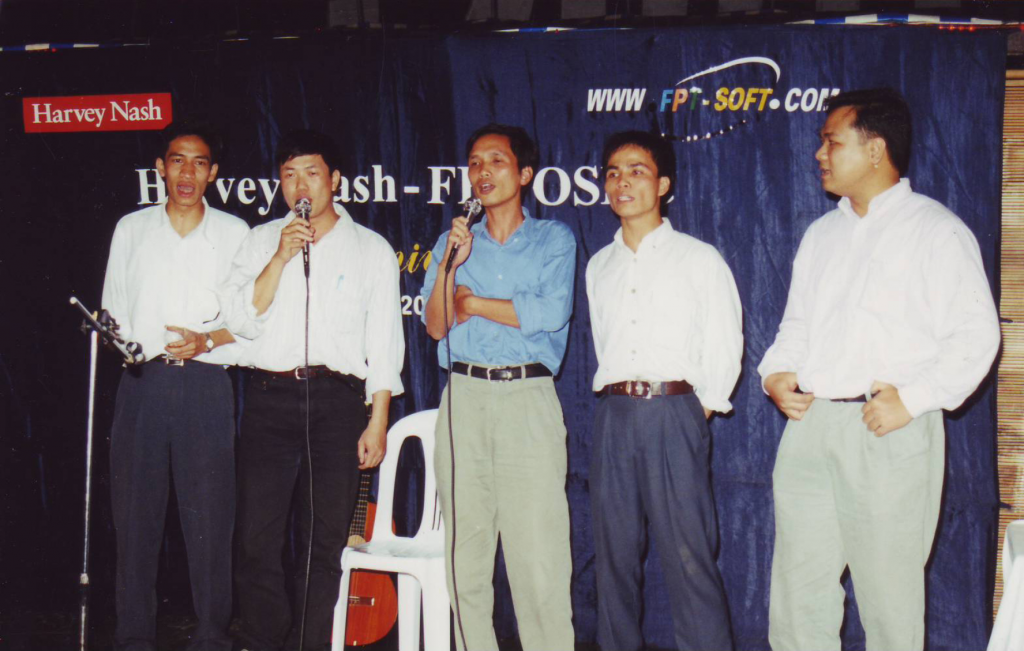
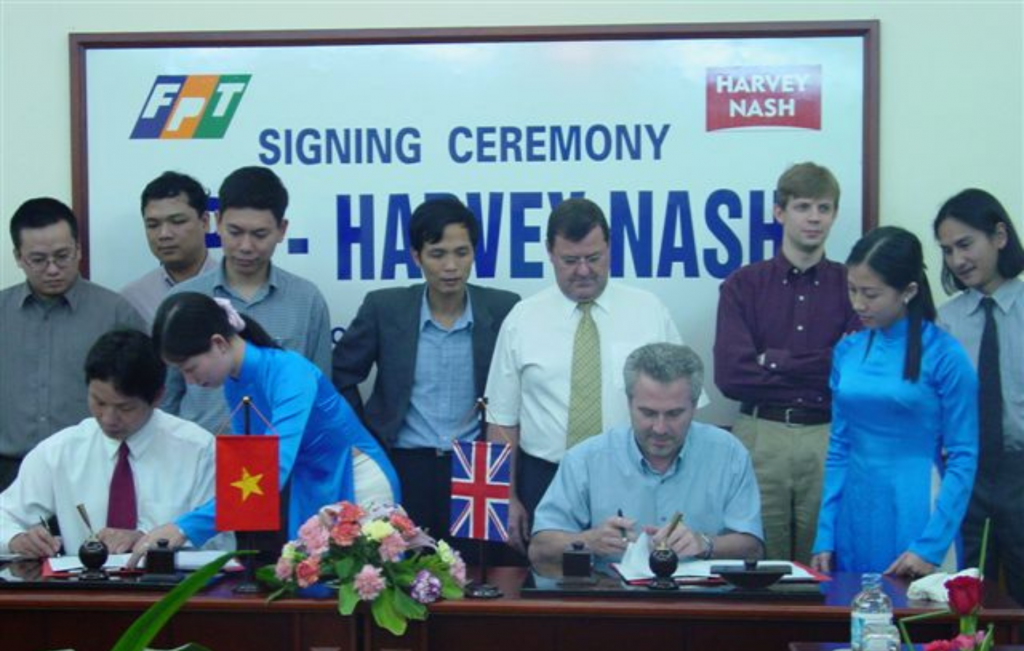
At this time, FSOFT was structured by the largest production units at the G level (Group: G1, G2, G3, G4, G5), each G further divided into smaller levels called D (Division). The G1 unit, working with Europe (namely Harvey Nash), was considered to bring in 90 percent of FSOFT’s revenue at this phase. Although small, projects targeting the Japanese market also began for the first time.

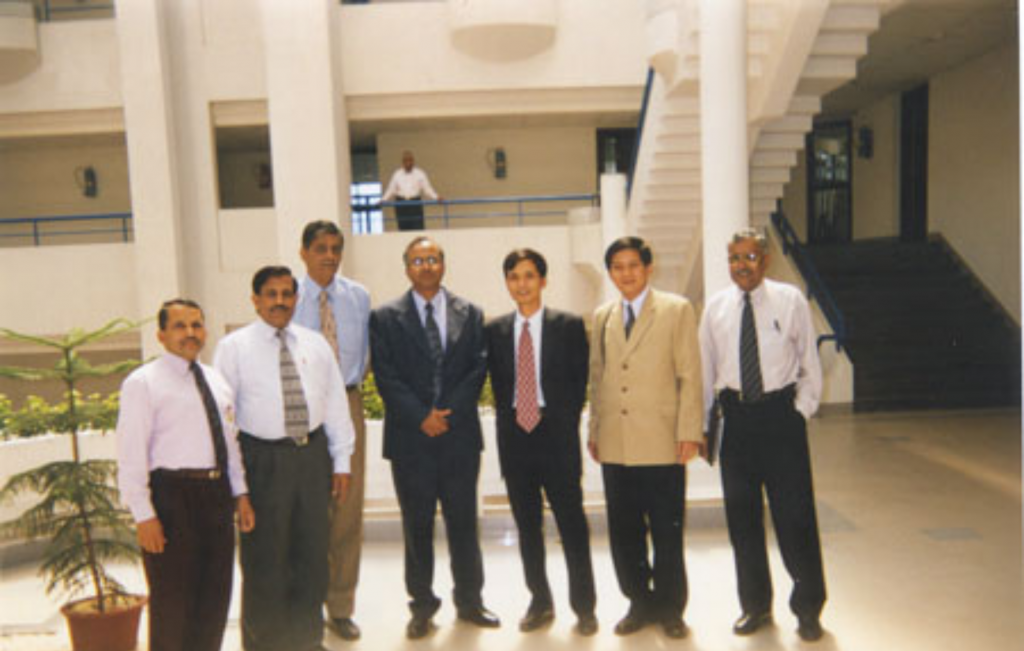
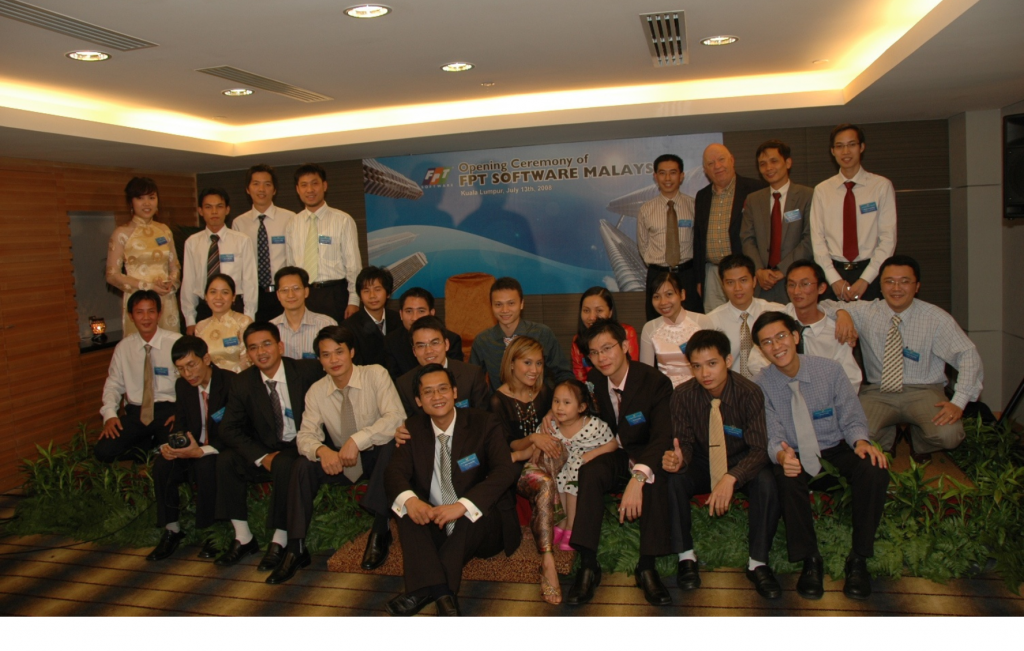
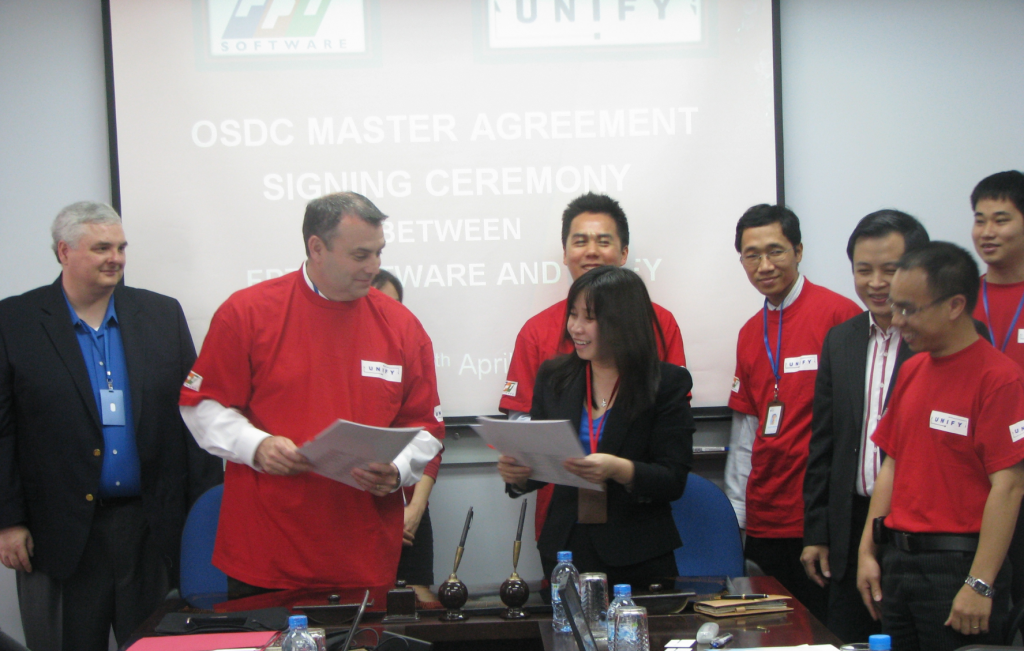
The second phase witnessed the cross-border expansion of FSOFT with the company’s appearance in various foreign markets. Securing the contract from Petronas and succeeding in the first major project known as P1 led to FSOFT establishing a series of overseas branches (OBs) and marked the beginning of exceptional growth.
FSOFT started to secure large contracts (of some $1M) and established its position in the Japanese market.
Participating in leading FSOFT’s largest project at this phase, P1, worth $7 million with a Malaysian customer, Mr. Hoang Viet Anh affirmed: “This is the phase where we are able to stand firm and we are developing, or as it’s also called, we have built a core force, an elite troop for the major challenges ahead.”
In Japan, “big battles” with clients like HSK are prime examples of projects crucial for establishing the company’s foothold in this market in the future. For the US market, FSOFT have projects with companies such as ProDX and Cogita. These projects lay the groundwork for the company in the US market. In the Asia-Pacific region, the most critical battle of this phase is PetroNas – P1.
“This is the first million-dollar project where we acted as the main contractor and took full responsibility on the global market in general, not just in the Asia-Pacific market. Because in those years, in other markets, we were still primarily doing small-scale outsourcing and had not yet taken on the role of the main contractor,” affirmed Mr. Viet Anh.
According to FSOFT’s third CEO, Mr. Nguyen Thanh Lam, he further clarifies the concepts of “outsourcing” and “main contractor“. “We are confusing the concept of ‘outsourcing’ with ‘main contractor.’ These two concepts are not contradictory at all. Outsourcing can involve being the main contractor, subcontractor, hiring personnel… For example, we mentioned the SmartTouch project earlier. This project is an ‘outsourcing’ project where FSOFT acts as the ‘main contractor’.”
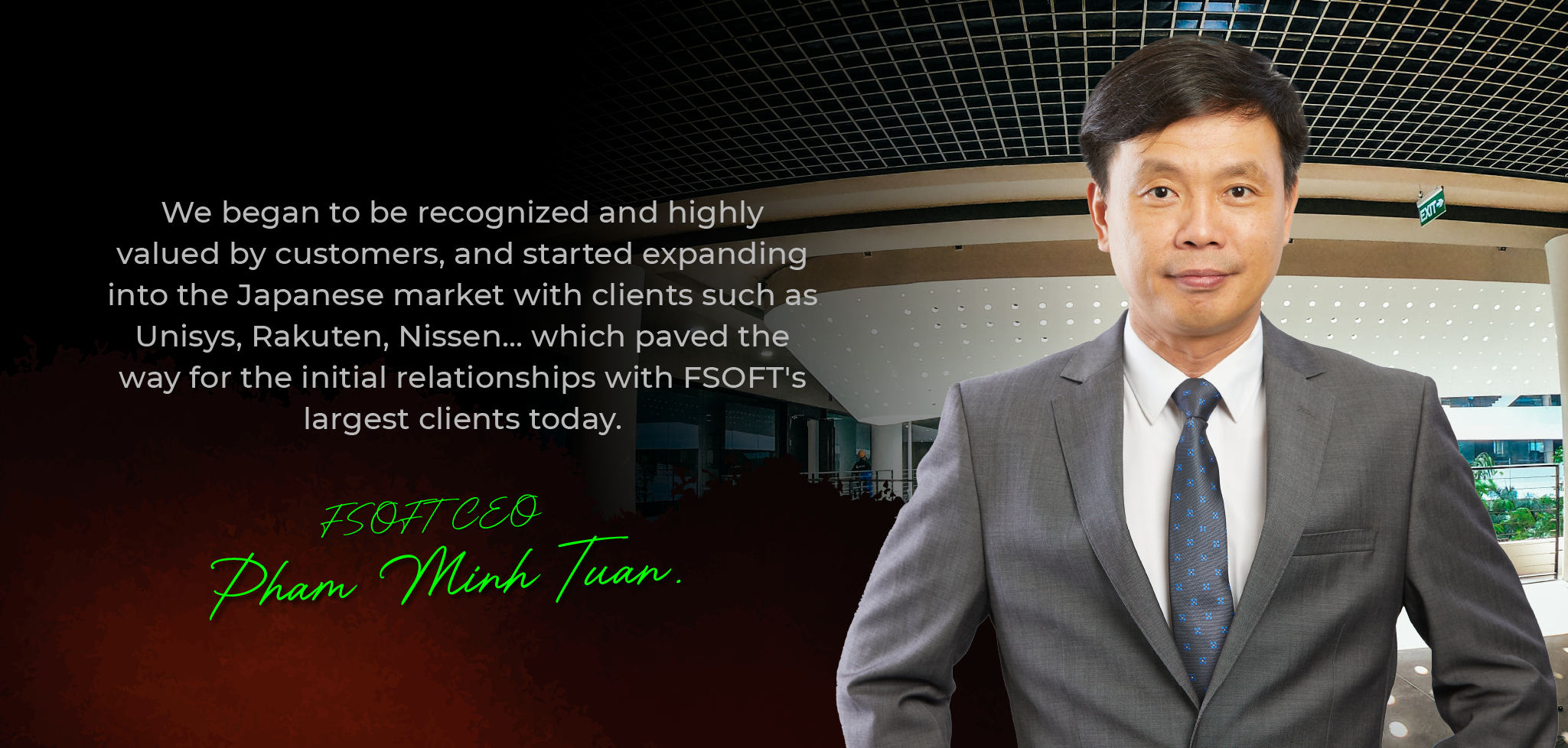
“We began to be recognized and highly valued by customers, and started expanding into the Japanese market with clients such as Unisys, Rakuten, Nissen… which paved the way for the initial relationships with FSOFT’s largest clients today,” FSOFT CEO Pham Minh Tuan shared about this phase.
During this phase, G4 was split into G7 and G8 in Hanoi, and G9 in Ho Chi Minh City while a large portion of G5 was relocated to Danang. From here, FSOFT expanded not only in Hanoi but also opened branches domestically in Ho Chi Minh City, Danang, and internationally in countries like Japan, the US… laying down crucial groundwork for the later achievement of reaching the $1 billion revenue milestone.

Having confidently passed through the door of life and death, FSOFT had to face their “transmigration”. Generally, this is a natural selection among big companies that want to “transcend to the higher level”, becoming more successful in the future. The process involves a challenging “transmigration”, which if the company can overcome, will bring them breakthrough during the development.
It was the difficulty when the company went through the wave of global economic crisis.
For the rather young team of leaders and managers in the 60s and 70s generation at FSOFT at that time, that was a trial, a period of self-training and building a stronger core team, eliminating the weaker links. The story of the earthquake and tsunami in Japan (March 11, 2011) was extremely devastating. In the toughest times, FSOFT remained united and resilient, responding to the call from FPT Chairman Trương Gia Bình to steadfastly support Japan, accompanying customers through difficulties.
“The decisive, persistent, and humanistic actions of FPT have persuaded Japanese customers, and we have received more trust from customers than ever before,” FSOFT CEO Phạm Minh Tuấn stated.
According to Mr. Viet Anh, the most significant imprint of this phase is the rapid growth of the Japanese market. He mentioned numerous large projects, diverse in forms, and levels importance in Japan. From projects where FSOFT conducted outsourcing for a few stages to projects where the company began to participate in the full-life cycle.
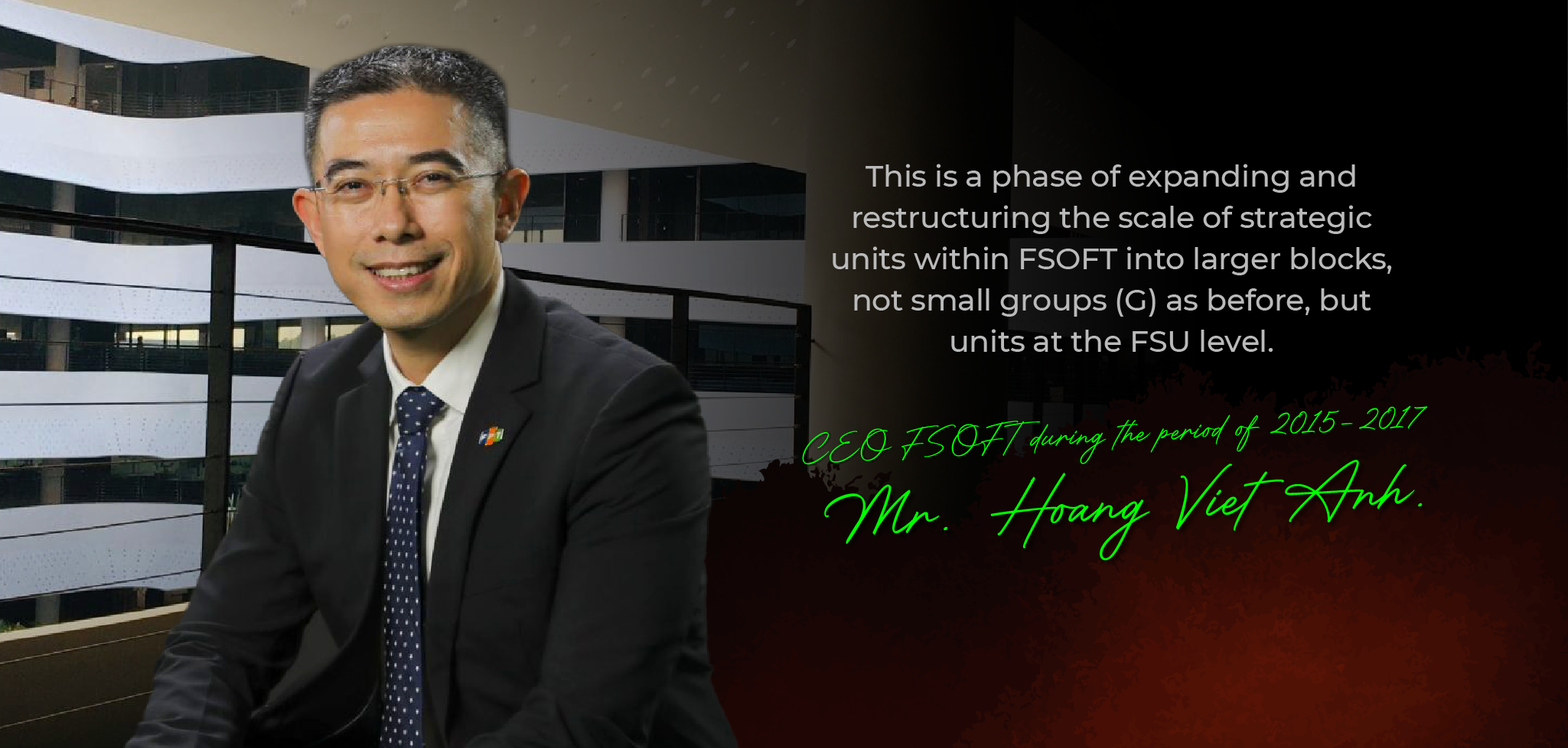
“This is a phase of expanding and restructuring the scale of strategic units within FSOFT into larger blocks, not small groups (G) as before, but units at the FSU level,” Mr. Viet Anh shared.
For the US market, during this phase, FSOFT had gained key accounts such as Direct TV and Boeing, which helped the company grow faster. Delivery units at FSOFT during this phase were shaped into FSUs (FSOFT Strategic Units: FSU1, FSU2, FSU3, FSU11, FSU15, and so on) and oversaw Bus (Business Units).

Overcoming the “transmigration”, FSOFT’s business exploded with major clients from the Japanese market such as R, Kyocera, Panasonic, Nissan, and so on especially alongside the project in the US market with DirectTV and other customers bringing FSOFT back to growth. To meet the pace of this new growth, FSOFT underwent restructuring in this phase to develop along different market directions.
“Some previous FSUs were merged into 2 new large-style FSUs (FSU1 responsible for the global mass market, FSU2 responsible for mass projects in the Japanese market), alongside the consolidation of industries into FSU models based on domains such as Embedded, Automotive, BSI, and strategic M&A to develop in depth,” recalled Mr. Phạm Minh Tuấn.
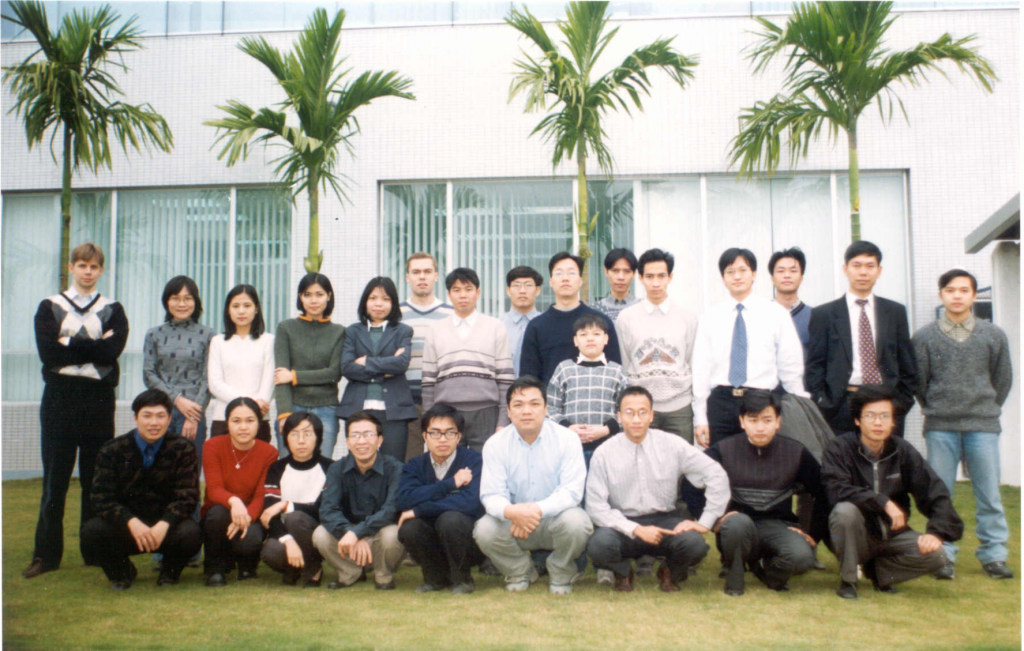
This was the time when FSOFT’s business flourished across all foreign markets. FSOFT intensified its efforts to deploy its top talents abroad. While Japan remained its stronghold, in the US, FSOFT continued to deploy top talents such as Mr. Dang Tran Phuong, and Mr. Dang Hong Hai in Germany. As a result, FSOFT achieved significant milestones during this phase, with Japan continuing to lead the way, the US market expanding further into oil and gas projects.
In the European market, Germany emerged as a bright spot with RWE. From these strongholds, FSOFT began expanding into other accounts, helping the company consolidate its position in Germany. As for the Asia-Pacific market, this phase was relatively quiet due to certain difficulties in the Singapore market. FSOFT Malaysia continued to maintain its roots with clients like PetroNas and expanded the scale of PetroNas’s contract values.
During this phase, alongside the numbered FSUs specializing in mass production, there began to emerge FSUs with specialized names corresponding to specific industries or sectors such as FGA, BSI, DLG…

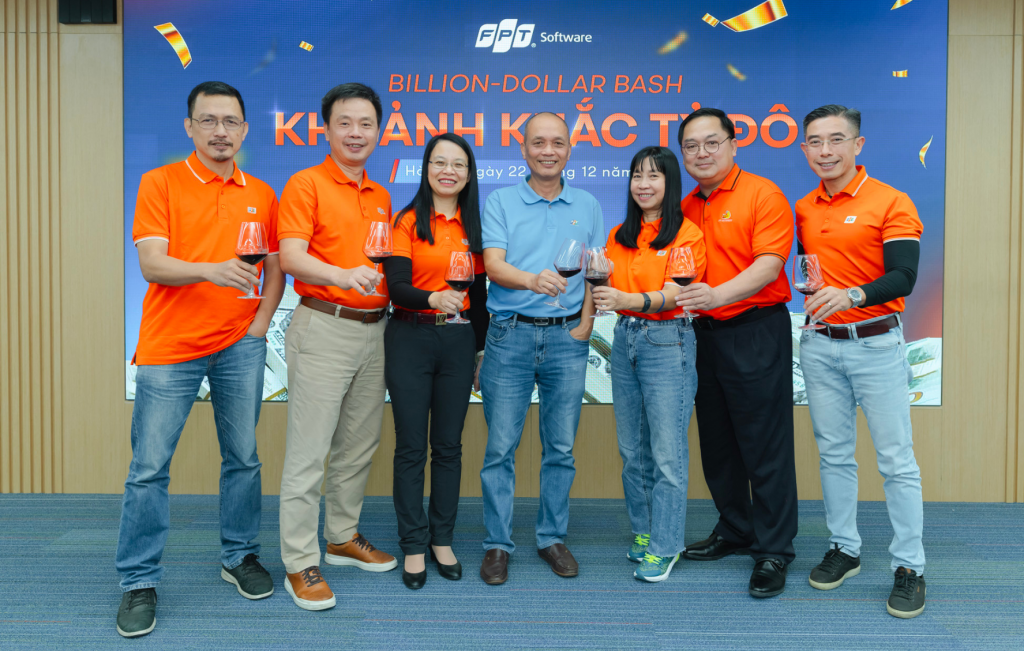
By simultaneously deepening its capabilities and expanding its development through contracts worth over $5 million up to several hundred million dollars, ten times more than the previous phase, the late-stage FSOFT of the 25-year cycle has truly accomplished the challenging mission: surpassing the $1 billion threshold.
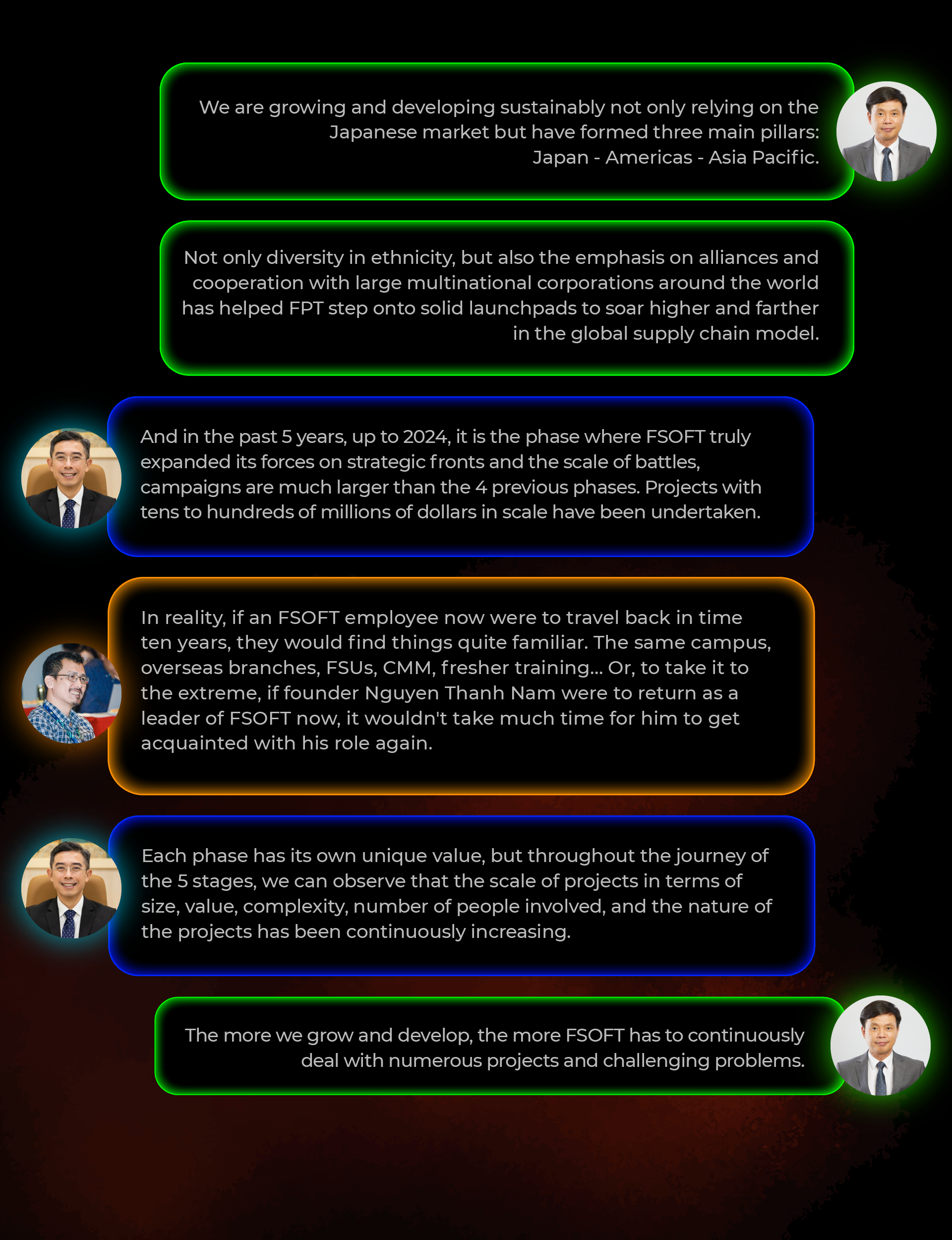
“We are growing and developing sustainably not only relying on the Japanese market but have formed three main pillars: Japan – Americas – Asia Pacific,” FSOFT’s CEO Pham Minh Tuan stated.
During this period, FSOFT has intensified the “Diversity” trend, as more and more foreigners join FSOFT’s ranks. No longer solely comprised of Vietnamese, there is now a force of over 2000 foreigners participating in the journey to achieve the $1 billion revenue target.
“Not only diversity in ethnicity, but also the emphasis on alliances and cooperation with large multinational corporations around the world has helped FPT step onto solid launchpads to soar higher and farther in the global supply chain model,” Mr. Tuan remarked.
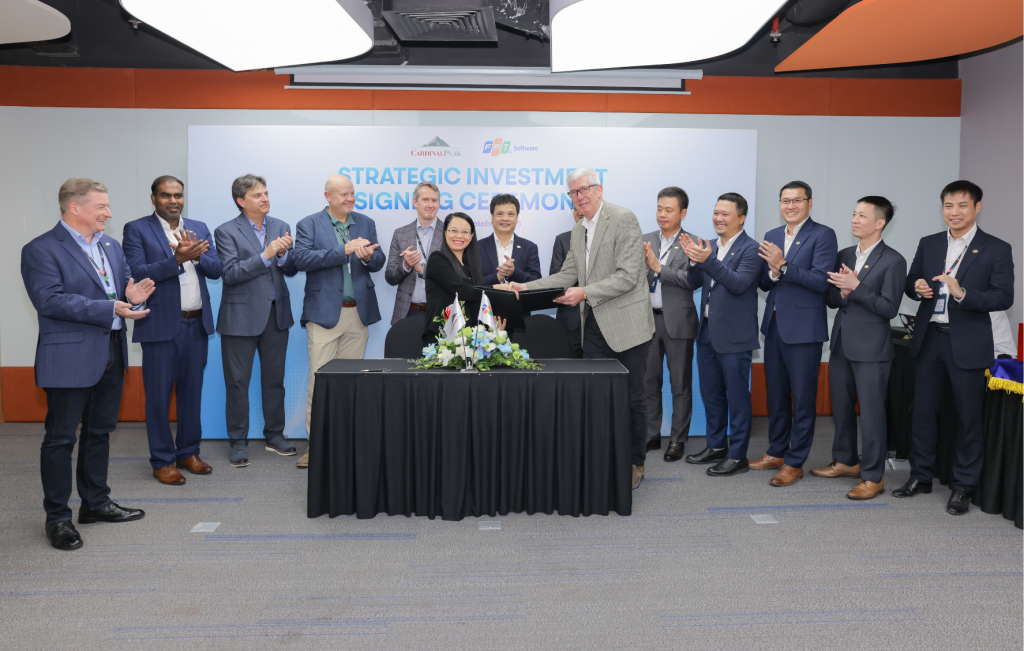
According to Mr. Hoang Viet Anh, the phase from 2019 to 2024 witnessed numerous mega-scale projects. One of the most significant milestones as well as the largest contract signed during this period is a 5-year contract with RWE in Germany worth over $100 million, or C99, which is equivalent to a major US client.
“And in the past 5 years, up to 2024, it is the phase where FSOFT truly expanded its forces on strategic fronts and the scale of battles, campaigns are much larger than the 4 previous phases. Projects with tens to hundreds of millions of dollars in scale have been undertaken,” Mr. Viet Anh proudly reflects on the FSOFT colleagues he has been with for decades.
Looking back at the 5 historical development phases of FSOFT in terms of project scale, the CEO of FSOFT during the 2012-2015 period, Mr. Nguyen Thanh Lam, shared his heartfelt insights, from a somewhat different perspective, that FSOFT today has grown much stronger than before, with a larger scale, more foreign employees, a larger consulting workforce, and more active in mergers and acquisitions.
“In reality, if an FSOFT employee now were to travel back in time ten years, they would find things quite familiar. The same campus, overseas branches, FSUs, CMM, fresher training… Or, to take it to the extreme, if founder Nguyen Thanh Nam were to return as a leader of FSOFT now, it wouldn’t take much time for him to get acquainted with his role again,” Mr. Thanh Lam humorously remarked to illustrate that no matter how FSOFT changes, its core values and essence remain unchanged.

It is expected that in the next 25 years, “the trend for FSOFT indicates that the company will continue to grow based on ‘at least’ three core markets: Japan, the United States, and the ASEAN Pacific, and will make significant investments in new industries,” CEO FSOFT Pham Minh Tuan shared. With the goal of 5Gs, FSOFT’s projects aspire not only to make FSOFT a billion-dollar revenue company but also to enter billion-dollar markets, industries, customers, contracts, and profits.
Article: Lam Hoang Son
Editor: Pham Vu Tuan
Designer: Duong Minh Han