FHN members decode the “End-to-End AI” model
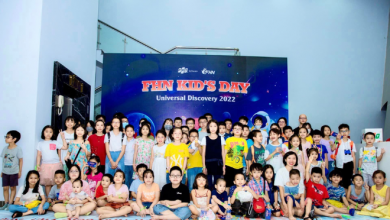
In a recent in-depth workshop titled “End-to-End AI,” more than 250 FHN members came together to analyze and openly discuss the success story behind the “End-to-End AI” model and the evolving future of software engineering.
During the session, FHN Deputy Director Bùi Xuân Cảnh provided a detailed presentation of the “End-to-End AI” model – FHN’s strategic initiative to realize the full potential of AI by 2025. At its core, the model aims to boost project productivity by integrating AI across every stage of the software development lifecycle.
In this model, the output of each phase becomes the input for the next – from requirement gathering and design, to coding, testing, and DevOps. Software engineers are no longer just coders; they are also responsible for designing prompt sets for AI agents and reviewing the outputs generated by these agents.
Mr. Cảnh also shared a case study from his recent participation in the CVT Auto Coding Hackathon. The project demonstrated the model’s potential to optimize costs, shorten delivery timelines, and win over clients through intelligent automation.
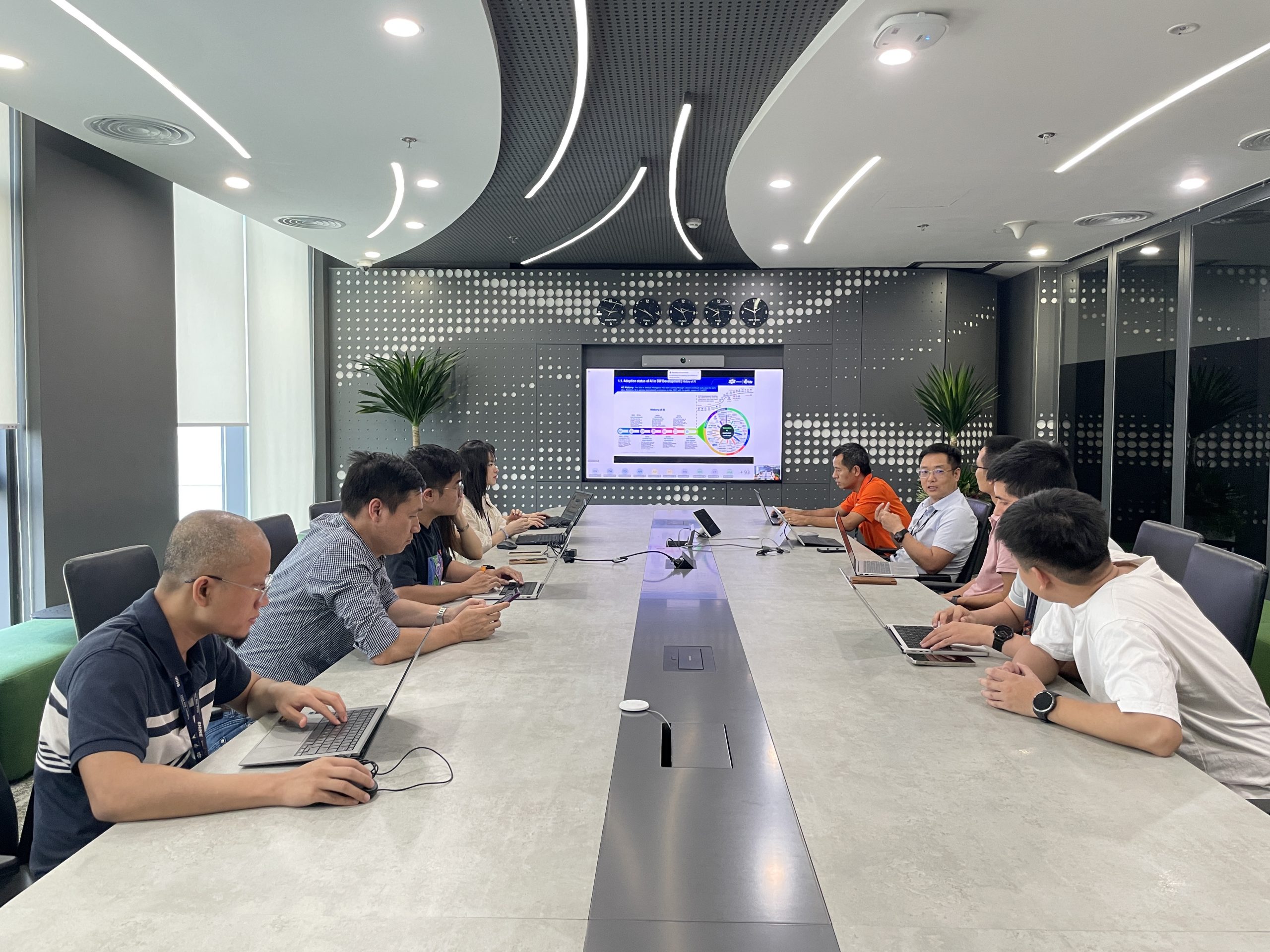
The workshop also featured open discussions about the future of programming careers. As AI becomes more deeply embedded in development workflows, engineers are transitioning from hands-on execution to roles that involve guiding, coordinating, and supervising AI agents. These agents are now capable of generating documents, code, test cases, and more.
Mr. Cảnh emphasized: “Skilled engineers have no reason to fear AI taking their jobs—because AI cannot replace the unique capabilities of human intelligence. Let us become wise orchestrators of AI.”
For many participants, the “End-to-End AI” workshop served as a powerful catalyst – encouraging every FHN employee to continuously learn, stay updated, and actively apply AI in their daily work. Mr. Nguyễn Hoài Nam (FHN.DCS) shared his perspective: “The workshop was truly inspiring. It sparked a strong motivation across the team to embrace AI not just as a tool, but as a core part of our daily workflows and future growth.”