FHM boosts productivity, expands Scale, aims to become a prime contractor in large-scale projects
FHM has been one of the pioneering units in implementing the Supply Chain Delivery Model (SCDM) since 2024. After a period of adoption, the SCDM program within FHM has seen strong growth, not only quickly addressing workforce challenges from clients but also optimizing operations and strengthening its position in large-scale projects.
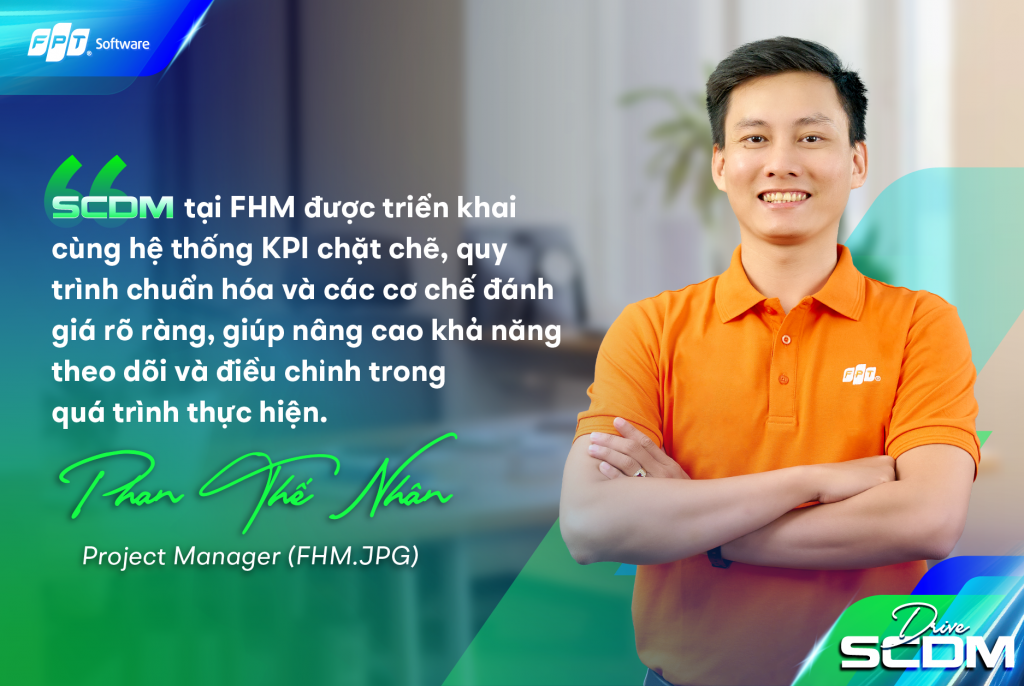
According to Phan Thế Nhân (FHM.JPG), SCDM is being rapidly implemented across all FHM member units while maintaining a structured and professional approach. This model is deployed alongside a strict KPI system, standardized processes, and clear performance evaluation mechanisms, enabling better tracking, assessment, and adjustment during execution.
Nhân shared that FHM has been applying different SCDM patterns flexibly, depending on the project type. Currently, three main models are in use:
- Serve Tier2: Mobilizing resources from Tier2 units to ensure workforce flexibility.
- Fixed Scope: Transferring a fixed portion of work to Tier2, optimizing operational efficiency.
- SI Model: Acting as a Prime or System Integrator in large-scale projects.
A prime example of SCDM’s effectiveness is the UIUXs2 project, a $2.5 million aviation-related initiative. Initially, the project had only 20 personnel but faced a client demand to scale up to 100 employees within a short timeframe. By applying the Serve Tier2 model, FHM efficiently mobilized resources from FCT (for Developers, Testers) and F1, IVS (for Testers), ensuring project deadlines were met without incurring long-term recruitment costs. At the same time, SCDM helped optimize costs for key roles such as Solution Architect (SA) and Business Analyst (BA), ultimately enhancing project quality.
The implementation of SCDM at FHM has received strong consensus across the entire workforce, thanks to a well-coordinated rollout plan that effectively leverages tools, templates, and the Q-C-D performance evaluation system. However, the unit faced some initial challenges, particularly geographical dispersion, as Tier2 units operate from different locations, making management and coordination more complex. Additionally, some personnel groups required time to adapt to the new processes.
Through flexible adjustments, especially by encouraging Tier2 leaders to take proactive roles in reporting and progress management, these challenges have gradually been addressed, ensuring smoother project operations.
Since its adoption, SCDM has delivered outstanding results for FHM. The model ensures rapid resource availability, allowing projects to scale up seamlessly in response to client needs. Additionally, cost optimization in operations has helped FHM achieve its margin targets while significantly improving workforce productivity, paving the way for the unit to reach even greater milestones.
Moving forward, FHM plans to expand the scope of SCDM implementation with the goal of becoming a Prime Contractor and System Integrator in large-scale projects. The unit aims to apply SCDM across more projects, leverage diverse patterns for greater flexibility, enhance self-sufficiency in resource allocation among Tier2 units, and solidify its position as a key partner for clients in major projects.