

FAMers capture the “once in a hundred years” moments of a total solar eclipse
The total solar eclipse occurred on April 8 (US time) and captivated the interest of millions, including FAMers in North America. This event, dubbed the “Great American Eclipse,” was visible in the sky over areas of Mexico, 15 US states, and eastern Canada.
Eager to witness the solar eclipse, FAMers and their families readied specialized glasses to shield against infrared radiation, ensuring safe viewing of this remarkable event. They scouted out perfect spots to fully appreciate this unforgettable phenomenon. This solar eclipse is the longest total eclipse in the US since 1806, and the darkest in the past 217 years.
Nguyen Thi Dieu Hang (FAM.ST3) shared her excitement about witnessing a solar eclipse for the first time. She expressed that her entire family is eagerly anticipating this event. Of special importance is their newborn, who just turned three months old and will experience her first total solar eclipse. Lasting only about three minutes in their city, the total solar eclipse will bring a gradual darkness and a drop in temperature during the halfway point. As the eclipse reaches its peak, the sky will darken completely, resembling nighttime. This unique moment will also be accompanied by the intriguing sounds of insects chirping, reminiscent of a typical night.
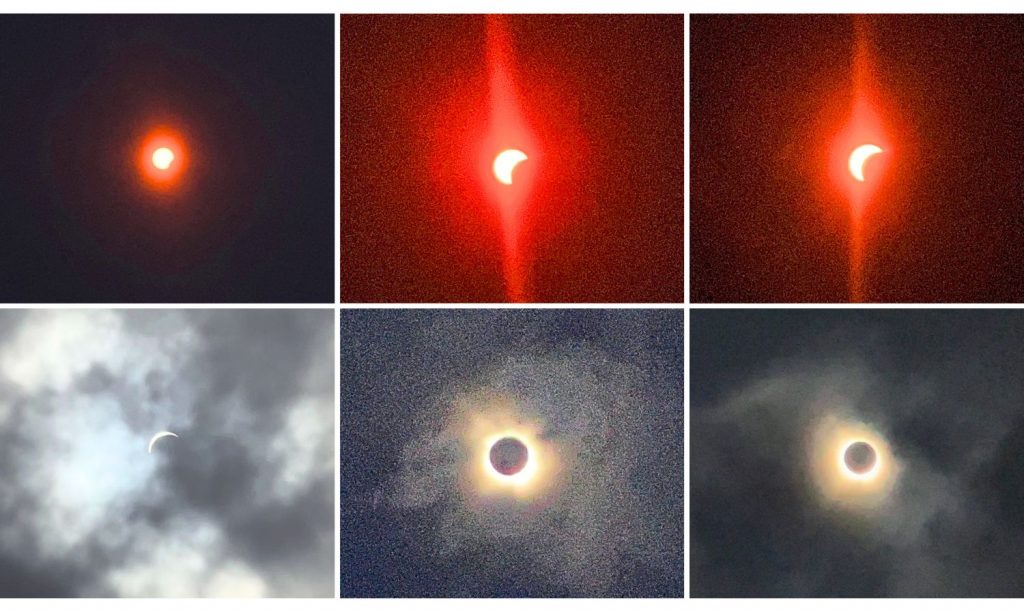
The family of Mr. Le Gia Cuong (FAM.ST9) had a unique experience despite not being able to witness the complete phenomenon. During a natural science examination, his children encountered something new. Mr. Cuong shared that when they saw a solar eclipse for the first time, his older son excitedly rushed to the front of the house exclaiming “happy eclipse day,” while the younger one headed to the back and sat on the swing under the pale yellow sunlight.

Mr. Vu Nhat Tin (FAM.ST9) considered himself fortunate to witness the enchanting beauty of the universe and held great admiration for the scientists who could precisely calculate the patterns of such natural wonders. He looks forward to the chance of witnessing this phenomenon again in the next two decades.

During a total solar eclipse, the Moon moves between the Sun and the Earth, creating a complete blockage of the Sun’s face. NASA states that the next total solar eclipse visible from the US will occur on August 23, 2044.
MaiNP3