Can a single AI formula approach fit all SDLC roles?
That was the question more than 200 members of GPE.EMD set out to answer during a workshop held last weekend – one of the unit’s key initiatives under the 30-day acceleration campaign driving GPE’s “AI Transformation” in 2026.
At the heart of the campaign lies an ambitious goal: ensuring 100% of members are equipped with GenAI capabilities tailored to their specific roles, aligned with their scopes of work, and applicable to daily activities, including ODC projects. To achieve this, GPE.EMD has taken a candid look at the gaps in AI adoption across different roles within project environments. Their strategy goes beyond simply granting tool access or rolling out mass training programs.
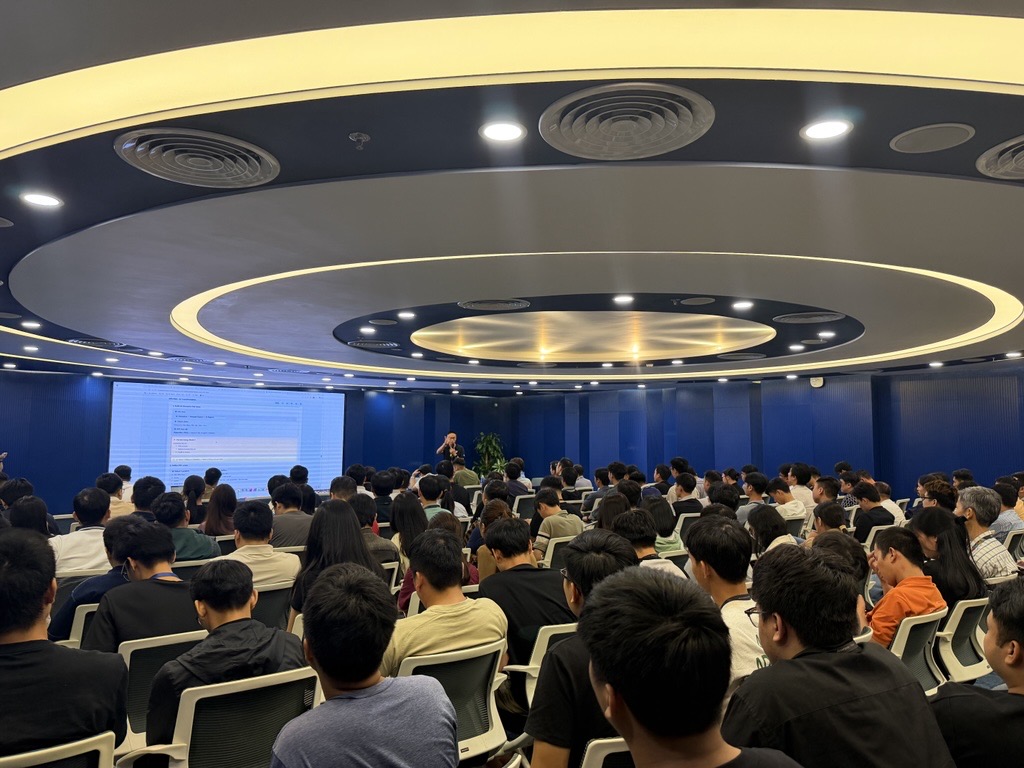
Rather than applying a one-size-fits-all formula, GPE.EMD focuses on precision, ensuring each project team has the right tools, the right use cases, the right deployment environment, and the right leadership. At the core of this approach is a dedicated AI taskforce, acting as catalysts within each project to translate the goal of “100% GenAI readiness” into concrete, day-to-day actions.
Speaking at the workshop, Mr. Phạm Quốc Toàn, BUL of GPE.EMD, emphasized that building AI capability at scale becomes challenging if AI cannot effectively reach every individual. Likewise, without the presence of “Champion Pairs,” AI cannot evolve into a true way of working.
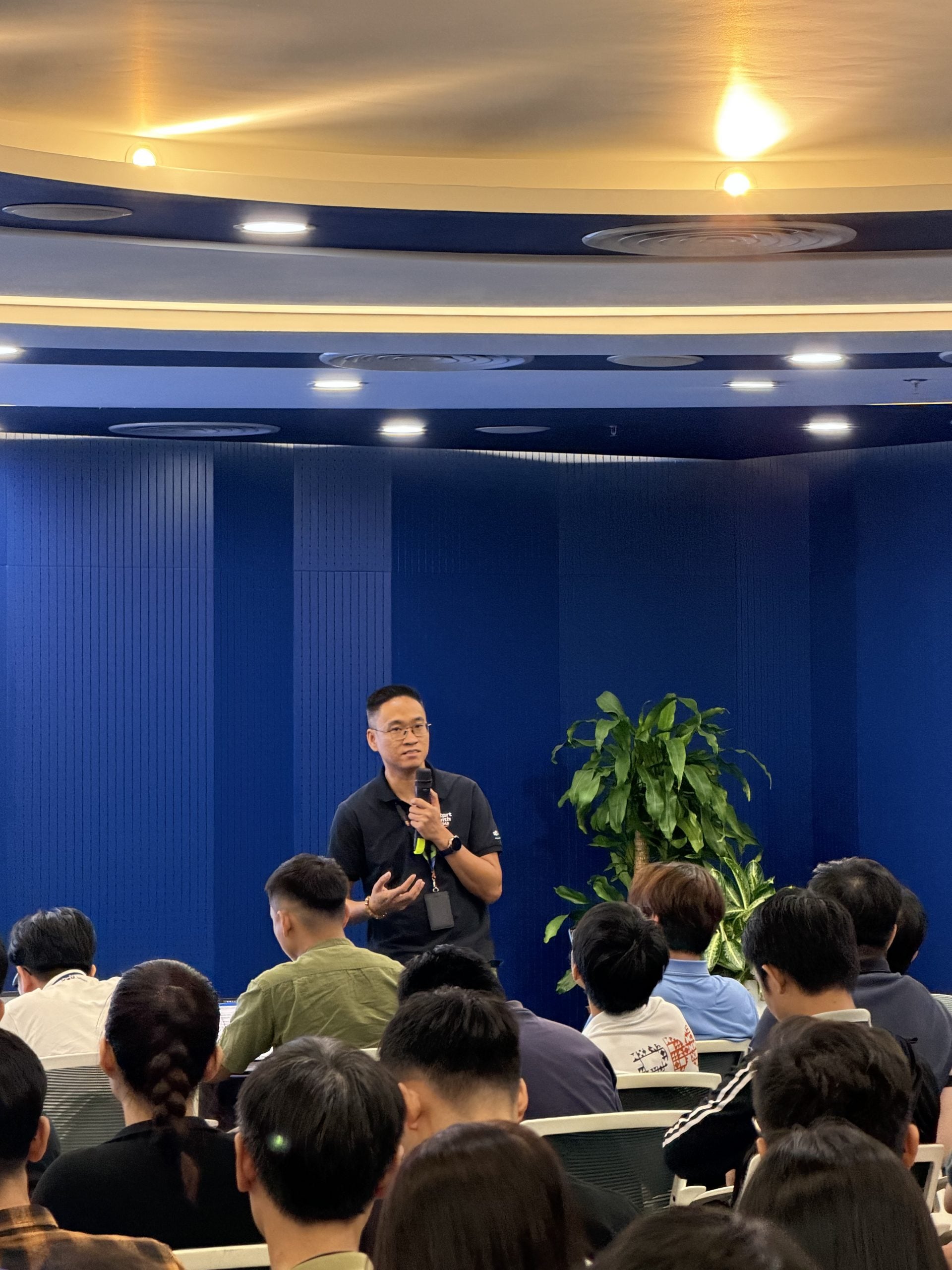
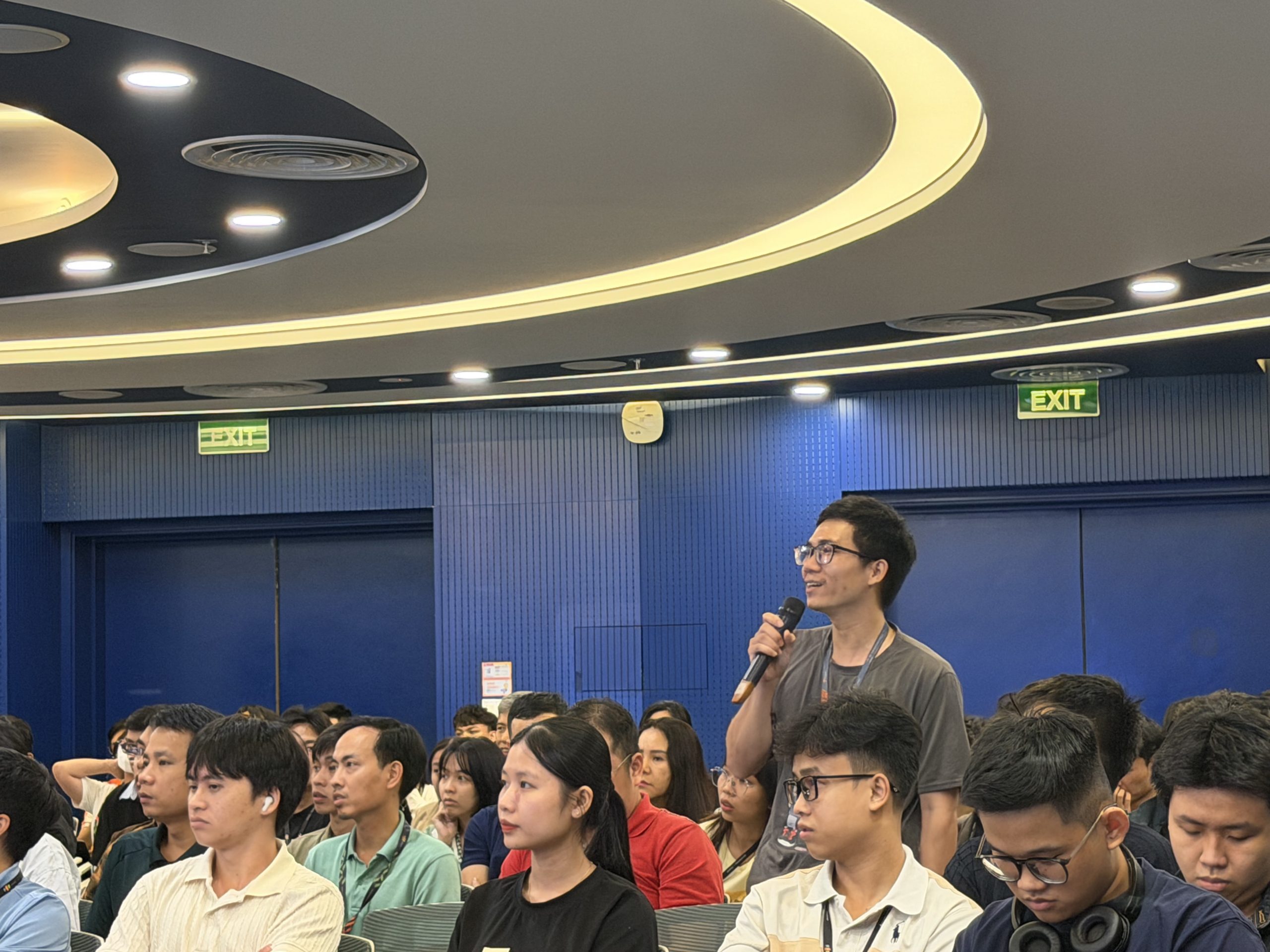
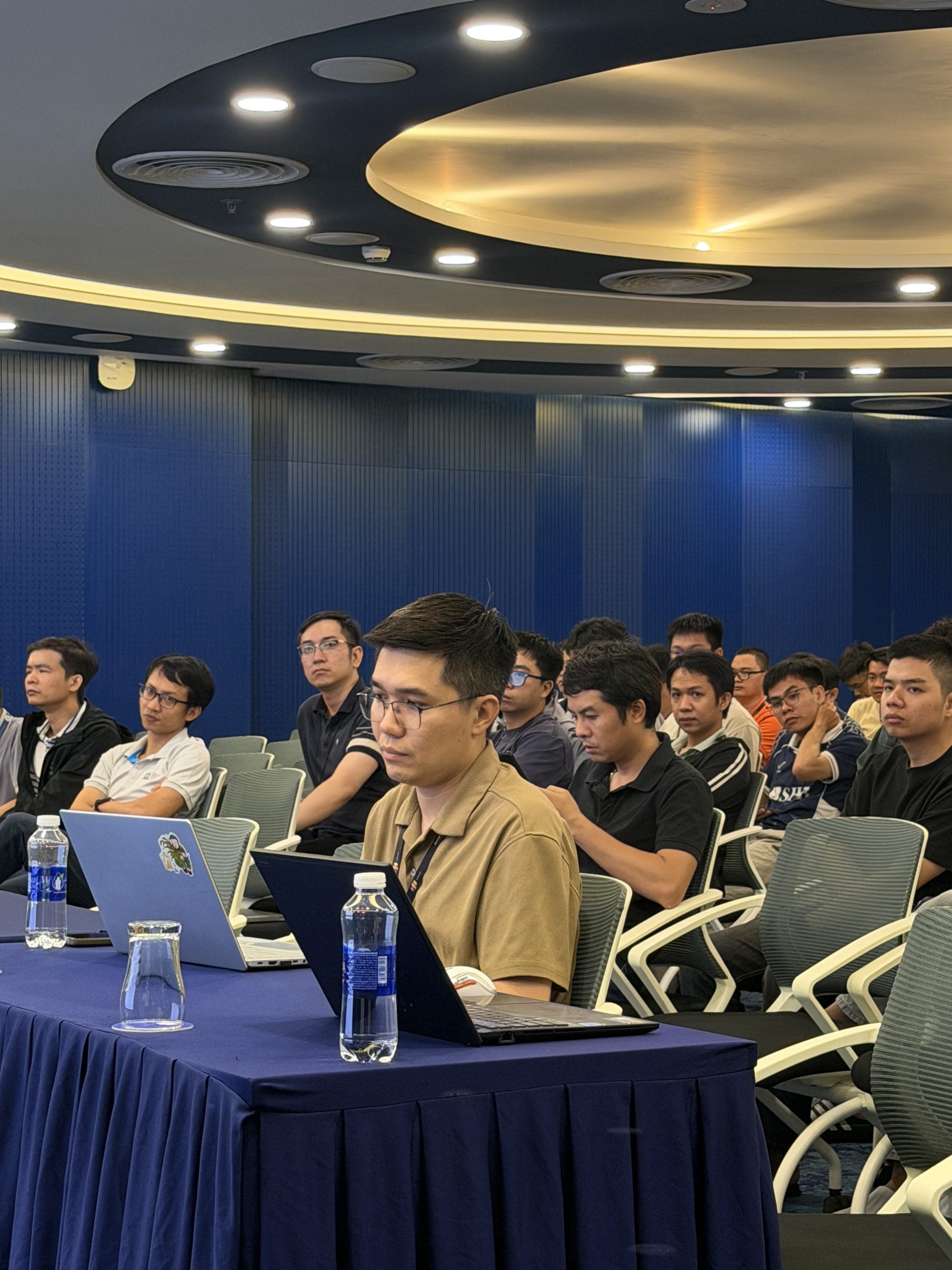
Out of this challenge, the AI360Sharing strategy was born – designed as a connected ecosystem of sharing, learning, and real-world application. Its purpose is to move GenAI beyond individual use, transforming it into a collective capability across GPE.EMD. The program spans the entire software development lifecycle, from project onboarding, enhancement, new development, re-platforming, and bug fixing to ODC projects, while engaging all roles involved in project delivery.
Crucially, proven best practices are not confined to individual teams. Instead, they are systematically captured into structured playbooks, laying the groundwork for scalable adoption across the entire unit.
GPE.EMD has also clearly mapped out its AI adoption journey through the AI Adoption Maturity Level (AaML) model, which comprises four levels. A key aspiration is reaching Supervised AI Automation – a stage where AI agents can execute multi-step workflows under human supervision. At this level, AI does not replace decision-making; rather, it accelerates execution, proposes solutions, and supports operations within a robust framework of approvals, controls, rollback mechanisms, auditability, and traceability.
Within the 30-day timeframe, GPE.EMD aims to elevate 70% of its projects from fragmented or individual AI usage to supervised automation. The ultimate vision: transforming AI into a practical, measurable, and scalable operational capability across the organization.