
Prevention: from a mandatory process to a work culture
The integration of advanced technologies to optimize quality management processes has become a cornerstone for businesses aiming to maintain a competitive edge. This is precisely the goal of the Quality Suite (QS) project by SCM, which has developed a quality management system tailored to the supply chain operations of GE Vernova. With more than 25 intricate modules, the project not only delivers technical solutions but also prioritizes embedding a culture of prevention to ensure quality and efficiency across every aspect of operations.
The QS project team has adopted a digital-first approach to quality assurance, recognizing that fostering a prevention culture is critical to reducing recurring errors, enhancing productivity, and improving overall quality. When issues arise, the team conducts thorough root cause analyses to implement corrective and preventive actions, ensuring similar problems do not recur. Regular reviews are also conducted, enabling team members to proactively identify and resolve potential issues before they impact the project. In pursuit of process standardization and system optimization, QS is actively refining procedures and defining checklists to maintain consistency across the system’s 25+ modules.
PM Tran Ngoc Thuan highlighted the importance of sharing lessons learned broadly to empower other teams to anticipate and mitigate similar challenges. This proactive approach has helped QS overcome obstacles such as limited resources for managing large-scale systems, inexperienced team members, and unaligned processes.
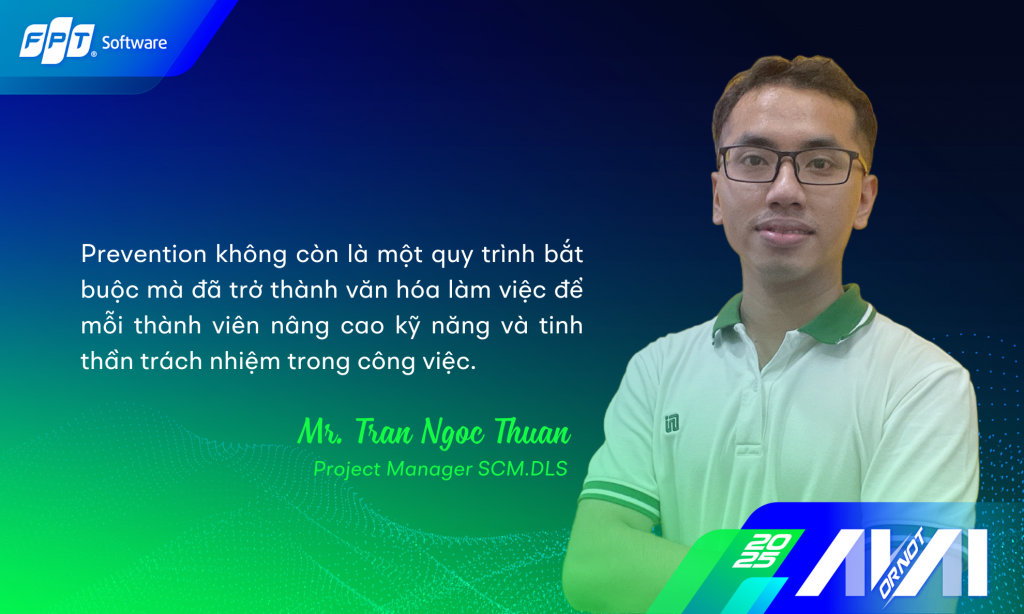
The implementation of a prevention culture has yielded remarkable results for the QS project. Early detection and resolution of potential issues have significantly reduced customer-reported errors, bolstering the project’s credibility and trustworthiness. Moreover, this culture has enabled the team to manage issue resolution timelines effectively while minimizing disruptions to primary projects. Thuan remarked that prevention has transcended its status as a mandatory process to become a deeply ingrained work culture, encouraging every team member to enhance their skills and take greater ownership of their responsibilities.
Looking ahead, the QS project envisions further refining and expanding this prevention culture. Plans include investing in automated testing and monitoring tools to minimize human errors and accelerate issue resolution. Additionally, developing a knowledge-sharing platform and fostering mechanisms to encourage creativity will further inspire and motivate team members to innovate and excel.